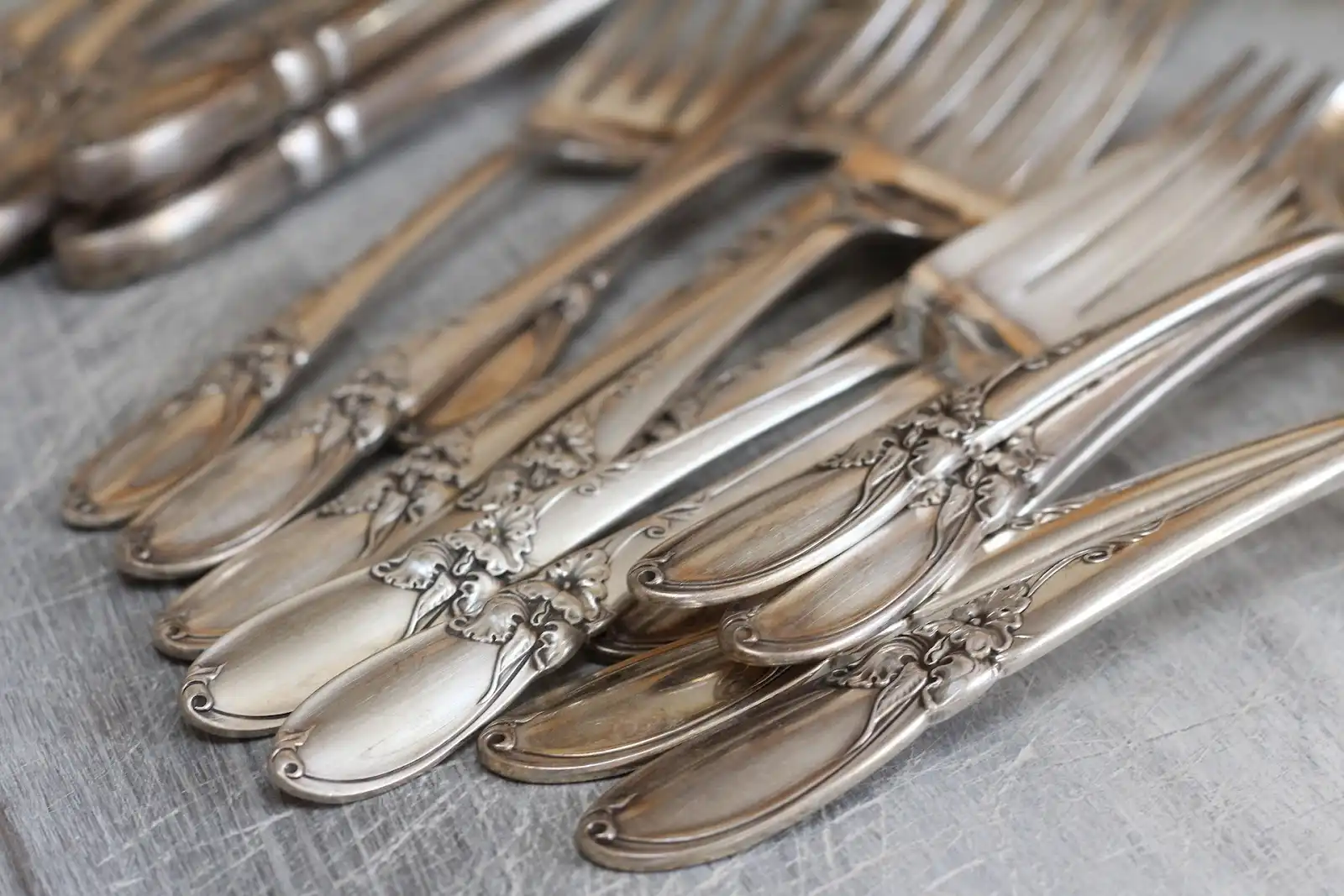
That drawer full of forks and spoons might look ordinary. But depending on what it’s made of, it could hold real silver value, or almost none at all.
Most people don’t know whether their flatware is sterling silver or just silver-plated. That confusion leads to one of the most common (and costly) mistakes we see: selling real silver for plated prices.
If you’ve ever wondered:
- Is my flatware actually silver?
- What is my silverware worth today?
- Is it worth selling silver flatware now or later?
You’re in the right place.
Silver prices change daily, and identifying what you own is the difference between walking away with cash, or leaving money on the table.
Sterling Silver vs. Silver-Plated Flatware: The Difference That Matters
At first glance, all silverware looks similar. The value difference is anything but.
Sterling Silver Flatware
Sterling silver is 92.5% pure silver, mixed with a small amount of copper for strength. This is the flatware that holds real intrinsic value.
How to identify it:
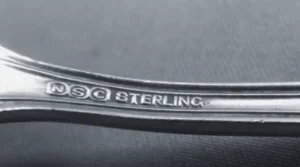
- Stamped with “Sterling” or “925”
- May include older hallmarks (lions, anchors, or foreign symbols)
- Typically lighter than plated pieces due to silver’s density
- Tarnishes naturally over time
If your flatware is sterling, its value is tied directly to the current silver spot price and weight.
Silver-Plated Flatware
Silver-plated flatware is not solid silver. It’s a base metal, often brass or nickel, coated with a very thin layer of silver.
Common markings include:
- EPNS (Electroplated Nickel Silver)
- IS (Inlaid Silver)
- Maker names without “Sterling” or “925”
EPNS, in particular, contains such a microscopic amount of silver that it holds virtually no melt value.
This distinction is critical. Sterling silver can be worth hundreds or thousands of dollars. Silver-plated flatware is typically worth very little beyond recycling.
Why Flatware Value Isn’t Just About Looks
Two identical-looking spoons can have dramatically different values.
Sterling silver:
- Is softer
- Scratches more easily
- Holds consistent metal value
- Can last generations
Silver-plated flatware:
- Feels harder due to base metal
- Loses appeal as plating wears
- Reveals cheaper metal underneath
- Declines in value over time
Relying on appearance alone is risky. Hallmarks and testing matter.
Why Knowing Your Silverware’s Value Matters More Than You Think
Silver prices fluctuate daily. What feels insignificant today could be worth substantially more tomorrow, or vice versa.
The biggest risks sellers face:
- Confusing sterling with silver-plated
- Accepting lowball offers
- Selling without understanding weight and purity
- Throwing away recyclable metal unknowingly
We regularly see customers shocked to learn their “worthless” drawer actually contains valuable sterling silver. We also see the opposite, people expecting a payout when the flatware is plated.
Knowledge protects you in both situations.
There’s also an environmental angle. Many thrift stores won’t accept silver-plated flatware anymore. Recycling keeps metals out of landfills and in circulation, even when payout is minimal.
How The Gold Guys Help You Sell Silver Flatware With Confidence
At The Gold Guys, silver flatware is evaluated properly, not guessed at.
Here’s how we do it:
Professional Identification
We examine hallmarks, test metal content, and assess weight using professional tools, not assumptions.
Market-Based Pricing
Sterling silver flatware is priced according to:
- Current silver market value
- Actual silver content
- Refining costs
No inflated promises. No confusing formulas.
Honest Handling of Silver-Plated Flatware
We do buy silver-plated flatware for recycling, but payouts are minimal due to low silver content. EPNS pieces contain so little silver that we cannot pay for them, but we still help recycle responsibly.
No Pattern Hype
Most flatware has no collectible premium. Value comes from metal, not design. Customers who shop around often return after realizing our offers reflect real market value.
Local or Mail-In Options
Not near a Gold Guys location? Call us first. We’ll tell you honestly whether your flatware is worth mailing in, saving you time and frustration.

Frequently Asked Questions About Silver Flatware
How can I tell if my flatware is sterling silver?
Look for “Sterling” or “925” stamps, usually on the back of handles. If there’s only a maker’s mark, it’s likely silver-plated.
Is silver-plated flatware worth anything?
Very little. It contains a thin silver coating over base metal. EPNS contains so little silver that it has no payout value.
Does age or pattern increase value?
Rarely. Most silverware is valued for metal content, not collectibility.
How do you calculate offers?
We use current silver spot prices, weight, purity, and refining costs to make transparent offers.
Can I sell silver flatware without cleaning it?
Yes. Tarnish doesn’t affect silver value. Just remove non-metal parts.