
The material world is built on technical terminology that outsiders easily confuse.
Amateurs constantly make the mistake of using the terms “smelting” and “refining” interchangeably. They assume any industrial process involving extreme heat and glowing, liquid metal is doing the exact same mechanical job.
Industrial manufacturing treats raw materials as finished commodities only after extensive processing.
In reality, physical elements must cross major physical, chemical, and thermal developmental thresholds. If you do not know the difference between extracting a metal and purifying it, you miss the core of metallurgy. You miss how raw geological matter becomes advanced material technology.
Smelting extracts raw, semi-pure metal from bulk material using high heat and chemical fluxes. Refining purifies that extracted metal at an atomic level using acids or electrolysis to achieve specific, high-purity industrial standards.
This article breaks down the exact science of both developmental stages.
You will discover why you cannot use raw material right out of a smelter. More importantly, you will learn the physical realities that separate bulk extraction from atomic isolation.
What is Smelting? (The Extraction Stage)
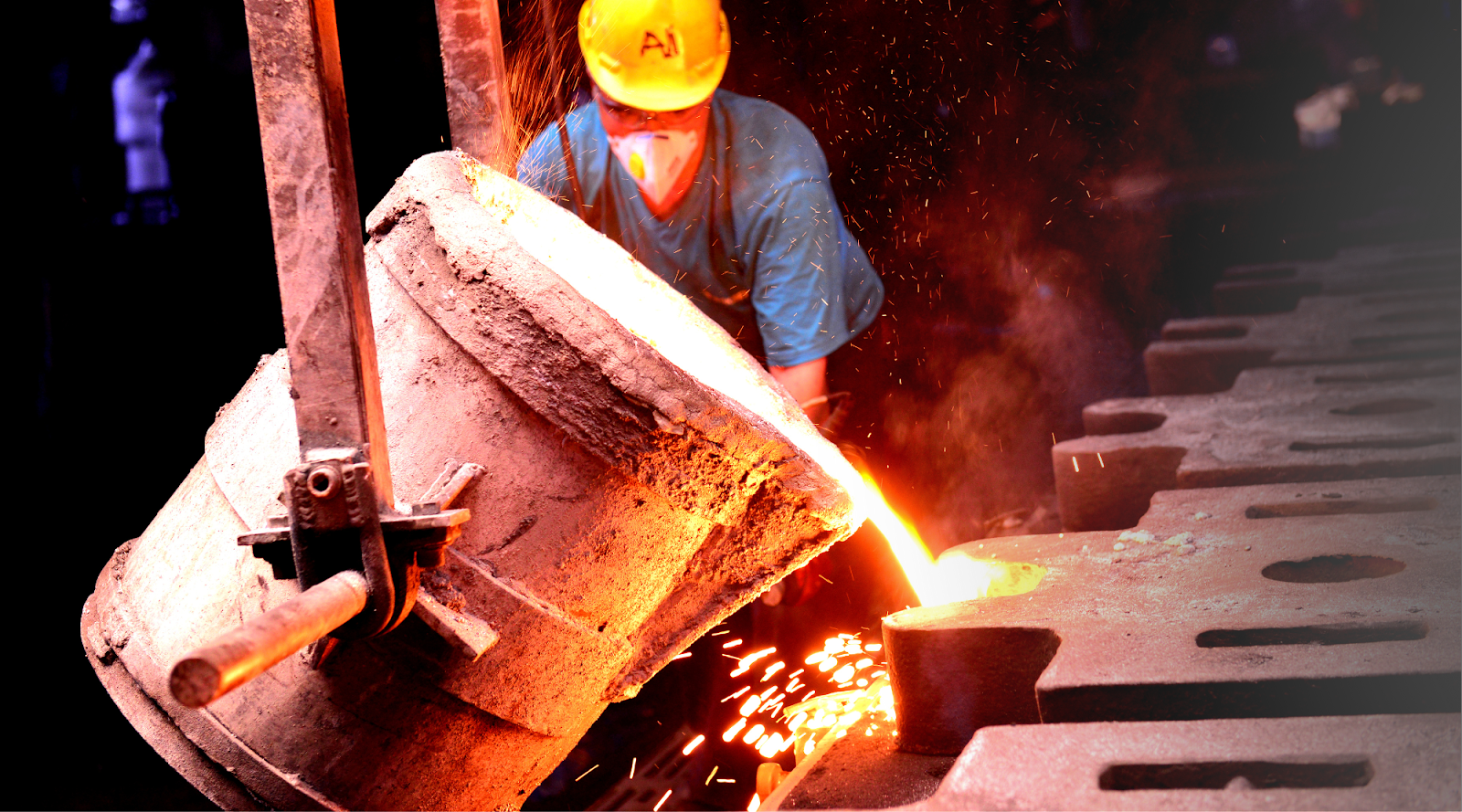
Smelting is a fire-based, pyrometallurgical process designed to separate precious metals from worthless host materials.
It takes raw mined ore, organic compounds, or manufacturing scrap and subjects them to intense thermal stress. The goal here is simple volume reduction. You are melting away the obvious rock and waste to isolate the target elements hiding inside.
The process moves sequentially through extreme thermal stages to crush the raw material’s volume.
Load the Crucible
Requires temperatures over 1,064°C for gold base.
Material is loaded into a heavy crucible and subjected to temperatures exceeding the core metal’s melting point.
Introduce the Flux
Borax, soda ash, and silica.
Chemical compounds are added to lower the melting point and absorb base impurities like a sponge.
Skim the Slag
Separation by liquid density
The lightweight, glassy waste layer floats to the top and is skimmed off as worthless slag.
Pour the Dore
Cooling the unrefined metal
A crude metallic dore bar is typically only 80% to 95% pure.
It remains a messy alloy containing unpredictable amounts of secondary elements, companion metals, or trace iron. The rough metal is far too brittle for precise manufacturing or sensitive industrial applications. It lacks the standardized consistency required for scientific instrumentation, advanced electronics, or uniform structural use.
Can you use metal right after smelting?
No, you absolutely cannot.

What is Refining? (The Purification Stage)
Refining picks up exactly where the crude smelting process leaves off.
It is a chemical or electrochemical process that takes a semi-pure dore bar and strips away remaining base metals. Refining operates down to individual atoms. This is where rough, unpredictable alloy structures become predictable, elemental materials.
The chemical route is widely used for batch processing and small laboratory operations.
The dore bar is dissolved in Aqua Regia, a highly corrosive blend of nitric and hydrochloric acid.
The target metal dissolves completely into a liquid state, while secondary metals like silver react to form a solid precipitate that settles down. Selective precipitating chemicals are then added to turn the liquid solution back into an ultra-pure metal powder.
This powder is washed, dried, and melted into its final, structurally sound shape.
Industrial scales require different, highly specialized chemical paths.
The Aqua Regia Bench Route
Batch Stage
Dissolving dore bars in acid to separate target metals into liquid and secondary elements into a solid salt precipitate.
The Miller Process
99.5% Purity Stage
Blowing chlorine gas into molten metal so remaining base impurities turn into chlorides and float away rapidly.
The Wohlwill Process
99.99% Purity Stage
Utilizing an electrochemical electrolyte bath to push metal from an anode to a high-purity cathode.
The Wohlwill process achieves the elite elemental purity standards required by modern science.
The Physical Science of Smelting vs. Refining
Industrial materials cannot exist without surviving both chemical and thermal systems.
Synthetic alternatives can be simulated, but elemental purity requires massive expenditures of thermal energy, complex chemical inputs, and specialized physical labor. It requires a deep understanding of thermodynamics and atomic properties.
The difference between smelting and refining illustrates the dual stages of physical material development.
| Parameter | Smelting (Extraction) | Refining (Purification) |
| Primary Method | Pyrometallurgical (Extreme Heat & Flux) | Hydrometallurgical & Electrochemical (Acids/Electrolysis) |
| Input Feedstock | Raw Ore, Scrap Metal, Mixed E-Waste | Semi-pure Dore Bars, High-Grade Sweeps |
| Output Form | Unrefined Dore Bar (80% to 95% Purity) | Uniform, Isolated Elements (99.9% Purity) |
| Market Role | Reduces bulk volume for shipping | Creates standardized, reliable scientific materials |
Raw geological inputs are highly variable and unpredictable.
Processed elements refined to 99.99% purity exhibit uniform physical constants that engineers can rely upon.
Is a smelter the same as a refinery?
No. A smelter uses high heat to melt down bulk materials and extract rough, semi-pure metal alloys. A refinery uses chemical acids or electricity to purify those rough alloys into exact 99.9% or 99.99% elemental purities.
What purity is a gold dore bar?
A dore bar typically ranges between 80% and 95% gold purity. The remaining percentage consists of an unverified blend of silver, copper, and other base metals that require chemical refining to separate.
How do refineries separate gold from silver?
Refineries commonly use the Aqua Regia process. When the unrefined alloy is dropped into the specialized acid mixture, the gold completely dissolves into a liquid solution, while the silver reacts with chlorine to form a solid, metallic salt precipitate that sinks to the bottom, allowing clean separation.
What is the purpose of flux in smelting?
Flux is a chemical cleaning agent added to the crucible during the melting stage.
It serves two critical functions that heat alone cannot accomplish. First, it lowers the melting temperature of the entire mixture, saving energy. Second, it binds with unwanted oxides and impurities, creating a lightweight layer that separates easily from the heavy metal.
Without flux, the impurities would stay trapped inside the molten alloy.
Why can’t you use chemical refining directly on raw ore?
Raw ore is mostly non-metallic host rock, dirt, and organic material.
If you poured acid directly onto raw ore, the chemical volume required would be massive and impossibly expensive. The acids would react with the surrounding rock instead of isolating the target elements. Smelting must happen first to burn away the bulk volume and leave a concentrated metallic feedstock.
Smelting handles the physical bulk, while refining handles the atomic precision.
What happens to the base metals stripped away during refining?
The copper, nickel, iron, and lead removed during purification are rarely thrown away.
Refineries capture these secondary elements as they precipitate out of chemical baths or settle at the bottom of electrochemical tanks. These byproducts are collected, washed, and diverted into their own industrial manufacturing supply chains. Modern refining setups are designed to run as closed-loop systems where every element is recovered.
Waste is minimized by turning impurities into valuable secondary materials.
