BUILD YOUR WEALTH LEARN MORE

Gold vs. Government Bonds: Which Asset Protects Your Wealth Better?

Wall Street headlines are currently buzzing with news of the U.S. 30-year Treasury yield surging past 5.3%.

For traditional investors taught to follow textbook financial logic, a “guaranteed” 5.3% annual return feels like an absolute gift. It looks clean, simple, and safe on paper. Mainstream advisors are quickly rushing to tell their clients that risk-free yield has finally returned to the market.

Is lending your hard-earned money to an over-indebted sovereign government actually risk-free today? Or is this high nominal yield a massive trap designed to hide severe purchasing power destruction? Read more »
Is White Gold Worth More Than Yellow Gold? Retail Value vs. Resale Value

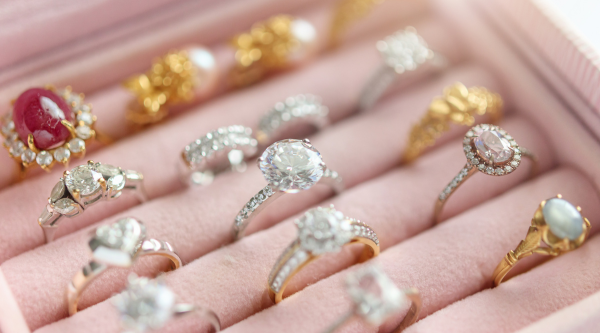
Standing at a retail jewelry counter, you often see two identical 14k gold necklaces.

One glows with traditional warm yellow, while the other shines with a bright, mirror-like white finish. Yet, the white gold piece frequently carries a price tag ten to fifteen percent higher than its yellow twin. The immediate conclusion most people draw is that white gold contains more gold or holds higher intrinsic value.

That conclusion is one of the most expensive misunderstandings in the entire retail jewelry market.

Direct Answer: At retail, white gold costs more due to higher alloy costs, extra manufacturing labor, and protective rhodium electroplating. However, on the secondary market, white gold vs yellow gold resale value is identical for matching karat weights. Gold buyers price both strictly on pure fine gold melt weight.

Most people confuse retail markup with actual secondary market cash value.

This post breaks down that two-part journey. First, we examine why retail jewelry stores charge you a premium for white gold upfront. Then, we reveal how professional scrap gold buyers calculate real cash value when you decide to liquidate your pieces. Read more »

How Much Is Your Wedding Ring Really Worth?

You walk into a luxury retail jewelry store with five thousand dollars in your bank account.

You walk out twenty minutes later holding a shiny ring that is instantly worth three hundred dollars on the secondary market. That sudden collapse in value feels like an absolute robbery to the average consumer expecting long-term appreciation. Most people assume fine jewelry acts as a store of value, but secondary commodity markets quickly prove that assumption wrong.

The massive gap between sentimental value and economic value catches almost every seller completely off guard.

If you have ever wondered what your jewelry is actually worth in cold hard cash, you are not alone. Once you pull back the curtain on retail markups versus secondary commodity markets, the entire system makes complete sense. Read on to learn about the hidden mechanics of retail pricing, why men’s bands beat diamond rings, and how to calculate your gold’s melt value. Read more »

Investing In Gold vs. Silver: A Complete Guide for the Common Investor

Not sure whether you should be investing in gold or silver?

Gold and silver have protected wealth for thousands of years, but they’re not the same metal, and they’re not the same investment.

One is steady, defensive, and backed by central banks. The other is volatile, industrial, and full of speculative upside. Most people ask, “Should I buy gold or silver?” without realizing the real question being, “What am I trying to accomplish?”

This guide gives you the full picture.

We’ll cover the key differences, which metal fits your goals, how much to own, how to use the gold-to-silver ratio, and the mistakes that cost beginners thousands. Whether you’re here to preserve wealth or chase growth, this guide will help you figure out your course of action! Read more »

How to Protect Your Bullion: The Best (and Worst) Ways to Store Coins, Bars, and Rounds

Most people buy gold and silver because they want physical wealth free from counterparty risk.

Yet holding real money comes with a certain risk that has nothing to do with market crashes or central banks. Pure precious metals are easily damaged.

  • They can erode when exposed to atmospheric sulfur.
  • Bad storage plastics can stain them.
  • And careless human handling can permanently scar them.

Not all bullion storage options are created equal. Protecting investment-grade gold and silver requires knowing the hierarchy of protection.

This practical guide ranks every storage method, exposes environmental threats, and gives you the exact handling rules needed to keep your buyback premiums intact. Read more »

ups
Safe, Fast & Insured Shipping

The Gold Guys uses UPS to make sure your items arrive just as you shipped them. Learn more »

bbc
An "A" Rating from the BBB

The Gold Guys works hard to deliver the best customer experience and it shows with our rating from the BBB. Learn more »