

Ever notice how gold prices seem to jump for no obvious reason?
One day it’s calm. The next, it’s bouncing like it had too much coffee. And no, it’s not just everyday investors or gold collectors driving those moves.
The real players? Central banks.
They’re the quiet giants behind the scenes, buying, selling, and influencing gold prices in ways most people never see.
And here’s why that matters: whether you’re planning to buy gold bullion or sell old jewelry, their decisions directly affect the price you pay, or the cash you walk away with.
Let’s pull back the curtain.
What Are Central Banks, and Why Do They Buy Gold?
At their core, central banks are the financial backbone of a country. They manage money supply, control interest rates, and hold massive reserves of assets.
So why are they obsessed with gold?
Because gold checks boxes that few other assets can:
- Stability: Gold holds value when currencies fluctuate
- Diversification: It spreads risk beyond paper assets
- Crisis protection: It performs well during economic uncertainty
- Historical trust: Gold has been valuable for thousands of years
Central banks don’t want all their wealth tied to currencies that can weaken or inflate. Gold acts as a kind of financial insurance policy.
And they’re not buying small amounts.
In recent years, central banks have been purchasing over 1,000 metric tons of gold annually, a dramatic increase compared to previous decades. That’s not casual collecting. That’s strategy.
What this signals
When central banks increase their gold reserves, they’re sending a message:
“We trust gold to hold value when other things might not.”
And markets listen.
How Central Banks Influence Gold Prices
Central banks don’t just own gold, they actively shape its price.
When they make a move, the market reacts. Sometimes subtly. Sometimes dramatically.
Here’s how it works:
- Buying gold increases demand → Prices tend to rise
- Selling or leasing gold increases supply → Prices can dip
- Consistent buying builds long-term momentum → Bullish trends form
- Policy changes (like interest rates) → Shift gold’s attractiveness
But there’s another layer: signal and sentiment.
When central banks buy gold, they’re not just making a transaction, they’re making a statement. Other investors see that and often follow.
It’s like that one friend who walks into a party and suddenly changes the vibe.
Central banks do the same thing, just with trillion-dollar consequences.
Interest rates matter too
Gold doesn’t pay interest. So:
- When interest rates rise → Gold can lose appeal
- When rates fall → Gold often becomes more attractive
Add in inflation fears and money printing (quantitative easing), and gold starts to shine even brighter.
Why Central Banks Are Doubling Down on Gold Today
Right now, central banks aren’t just participating in the gold market.
They’re going all in.
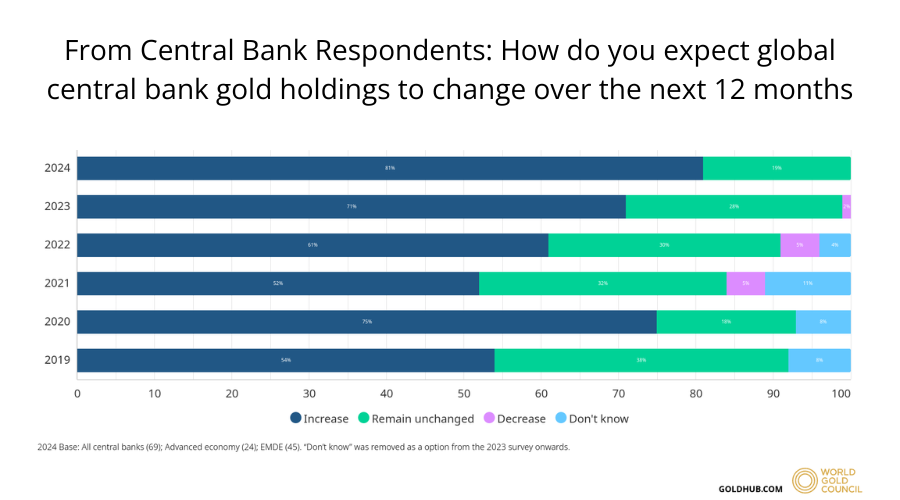
What’s driving this surge?
- Global uncertainty (trade tensions, geopolitical conflicts)
- Currency concerns (especially reliance on the U.S. dollar)
- Inflation pressures eroding purchasing power
- Diversification away from traditional reserves
Many countries, especially emerging economies, are actively reducing their reliance on the dollar and increasing their gold holdings.
According to recent surveys, over 90% of central banks plan to increase their gold reserves.
That’s not a coincidence. That’s a coordinated shift.
What it means
Gold is being treated less like a backup, and more like a core financial asset.
When the biggest financial institutions in the world start stacking gold at record levels, it’s a signal worth paying attention to.
What This Means for You as an Investor
So where does this leave you?
It’s simple: central banks are giving you clues, you just need to know how to read them.
Here’s how to think about it:
Gold isn’t a get-rich-quick investment. It’s a long-term stabilizer.
When central banks buy gold, they’re playing the long game, and you should too.
Smart ways to approach gold:
- Use gold as a hedge, not your entire portfolio
- Focus on physical gold (coins, bars, and rounds) for direct ownership
- Watch central bank trends for timing insights
- Think long-term, not short-term price swings
Gold works best as a foundation, not a gamble.

Why the Right Partner Matters
Understanding the market is one thing. Acting on it is another.
That’s where The Gold Guys come in.
Whether you’re looking to sell gold or buy gold bullion, having a trusted partner makes all the difference.
What you get:
- Competitive pricing based on real market trends
- Simple selling options (in-store or mail-in)
- Access to quality bullion products (either at one of our Gold Guys locations, or on goldguysbullion.com)
- Transparent, no-pressure transactions
Take Control While the Big Players Make Moves
Central banks aren’t guessing. They’re positioning.
They’re increasing gold reserves, reducing risk, and preparing for uncertainty. And while you don’t need billions to follow their lead, you can take a page from their playbook.
Gold remains one of the most trusted stores of value in the world, for a reason.
So whether you’re:
- Selling old jewelry for cash
- Buying gold as a long-term hedge
- Or just starting to explore precious metals
Now’s the time to pay attention.
