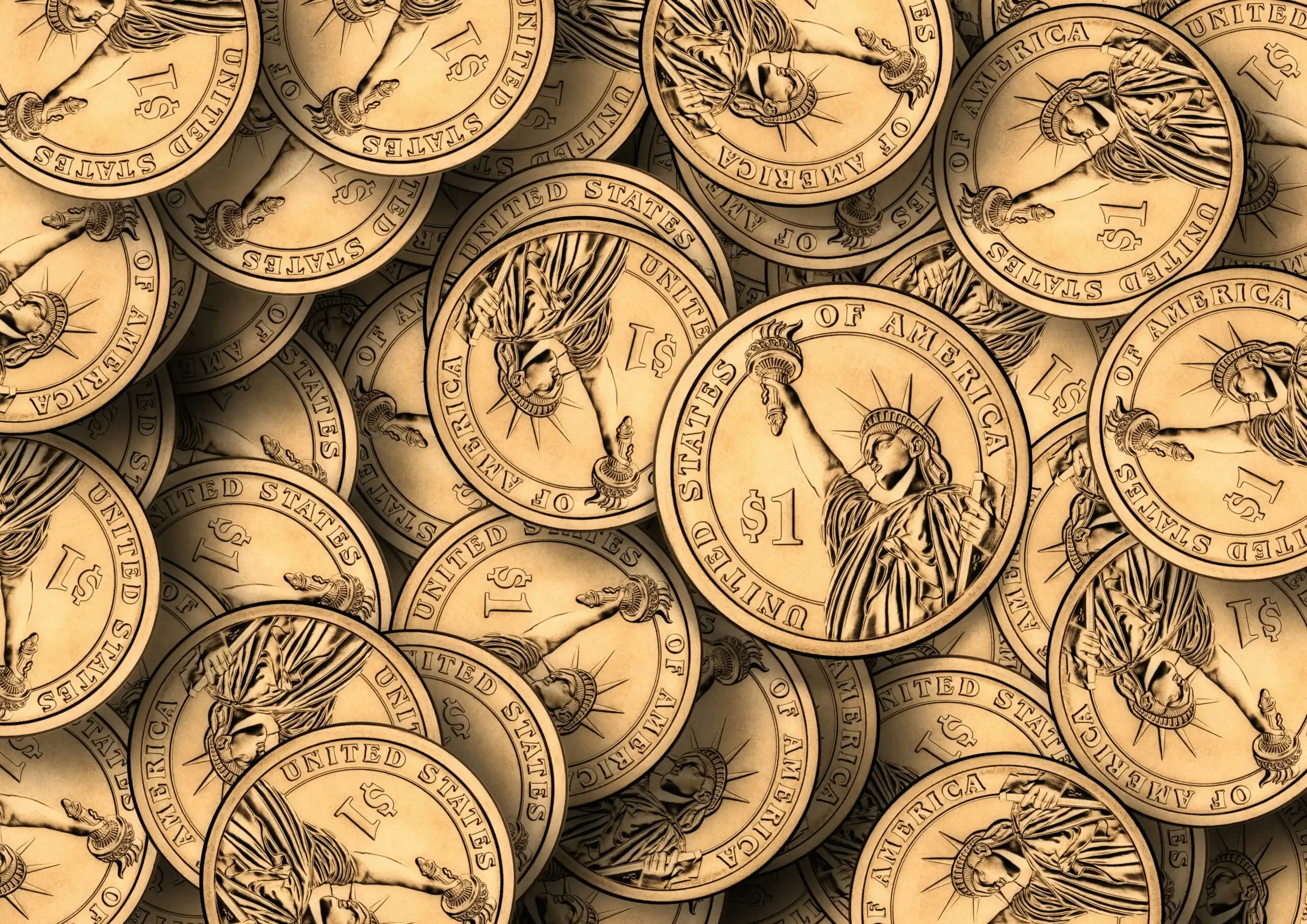
The internet is flooded with wild claims that your pocket change contains secret multi-million dollar fortunes.
Viral videos look for rare mistakes and tell you that everyone is sitting on a hidden jackpot. The truth about the precious metals market is much simpler, and based on basic math. Sorting through an old family collection means ignoring the online hype and focusing on the actual metal value.
Most old coins you find tucked away in desk drawers are simply worth their weight in metal.
The baseline value of most old coins is tied to one very simple economic rule.
For the vast majority of valuable dollar coins, the collector value and the raw metal value are the same. This guide will show you how to tell real silver weight apart from cheap, modern clad coins. We will break down which years matter, find rare mint marks, and clear up common public confusion.
Real cash value comes from the actual weight of the silver hiding inside the coin.
Vintage Silver Dollars
If you want to know which silver dollars are worth money, look at the classic heavyweights.
Old government laws set a strict rule for how these circulating coins had to be made.
Every official dollar coin made in 1935 or before contains exactly ninety percent pure precious metal. The other ten percent is copper, added just to make the soft silver tough enough for daily use. When you do the math, each of these big coins holds precisely 0.7734 ounces of pure silver.
This physical reality means their price is safely locked to the live global silver market.
Morgan Dollars

The Morgan Silver Dollar stands as the most famous face of historic American coinage.
Made from 1878 to 1904, and again for one huge final run in 1921, they are incredibly common. Beginners often assume their old age makes them rare museum pieces, but the mint made hundreds of millions. If you look up how much is a 1921 morgan dollar worth, the answer is usually simple.
While a few flawless coins bring big collector premiums, most track directly with the live price of silver.
Peace Dollars

The Peace Silver Dollar took over the minting presses starting in the winter of 1921.
Made until 1935, designers created this coin to celebrate the end of the First World War. It has the exact same weight and ninety percent silver standard as the older Morgan dollar. You do not need to guess or worry about confusing collector grades to know what it is worth.
Like the Morgan, its cash value changes based on the daily supply and demand of raw metal.
A strange piece of history marks the true end for normal silver dollar coins in America.
The government actually started making a new batch of over three hundred thousand Peace Dollars in 1964. Before they ever hit the public, the government changed its mind and melted them all back into bars. Only a few prototype pieces survived the fires, and it is legally forbidden for citizens to own them.
This emergency meltdown means no normal circulating dollar coins have real silver after the year 1935.
The Carson City Exception

While raw metal weight is the usual rule, production history creates a small handful of highly prized exceptions.
When checking what dollar coins are valuable, absolute rarity can completely override basic metal weight.
The baseline silver value stays active, but intense collector demand builds a massive second layer of value. This happens when a specific mint building makes coins under very tight or unusual historical moments. You are no longer just selling raw silver; you are selling a scarce piece of the American West.
Knowing this difference keeps you from accidentally selling a rare prize for its basic melt price.
The ultimate symbol of this extra collector value is the famous Carson City mint mark.
Stamped with a clear “CC” on the back, these coins have a direct link to cowboy history. The government built the Nevada mint right next to the Comstock Lode, a massive wild silver strike. This geographic link to the old mining frontier makes these pieces special to history buffs.
Every single coin stamped with those twin letters holds a story that plain silver bars cannot match.
The main reason behind their high market price comes down to simple supply and demand.
The Carson City mint was a small operation compared to massive facilities in Philadelphia or San Francisco. They made tiny fractions of the numbers turned out by those bigger cities, leaving behind very few survivors. Because they were made in much lower numbers, collectors will happily pay hundreds or thousands over spot price.
Even heavily worn examples keep a premium that leaves common coins far behind in the dust.
A quick glance at a carson city morgan dollar value chart proves that history pays well.
The Eisenhower Dollar
The Eisenhower dollar is a massive source of confusion for the public.
People frequently find these massive coins in old drawers and think they hit the silver jackpot. In reality, the vast majority of these large coins contain absolutely zero precious metal. They are standard base-metal tokens made from a basic blend of copper and nickel. If you try to liquidate them, a shop will tell you they are worth exactly one single dollar.
They are heavy and fun to hold, but they are just standard fiat pocket change.
The government did make a special exception to this base-metal rule specifically for coin collectors.
The mint produced special forty percent silver versions during the early years of production. These collectible pieces were sold directly to the public at a premium price instead of entering daily commerce. When you look at the exact metallurgy, each contains precisely 0.3161 ounces of pure silver.
Finding these specific eisenhower dollar silver years is how you locate real value inside this series.
Spotting these rare silver pieces requires a sharp eye and a basic understanding of mint marks.
First, check the front of the coin directly below the neck of President Eisenhower. You need to look for a small “S” stamped right above the date. This single letter shows the coin was made at the special San Francisco mint facility from 1971 to 1976. If the coin has a “P,” a “D,” or no mark at all, it is definitely base metal.
The silver pieces were originally shipped out in special blue envelopes or hard plastic cases.
An easy way to verify your coin is silver is a simple test that requires no special tools.
Hold the big dollar up and look directly at the outer edge of the rim. A standard copper-nickel coin shows a clear, bright copper stripe running straight through the center. A real forty percent silver piece shows a solid, uniform silver color across the entire edge.
This simple rim check tells you instantly if you have real silver or a basic base-metal token.

Modern Small Dollars
The modern era of small dollar coins is built on a massive visual deception.
People routinely look at shiny gold-colored coins and assume they found something incredibly valuable.
The bright metallic sheen triggers a basic psychological reaction that mimics the look of real hard money. In reality, the government completely substituted precious metal with cheap industrial alloys decades ago. If you take these small coins to a buyer, you will get a quick dose of reality.
They are completely safe to spend at the grocery store because they are worth exactly face value.
The modern experiment with small-sized dollars started with a coin the public absolutely hated.
Susan B. Anthony Dollars
Issued in 1979, the Susan B. Anthony dollar was a total commercial failure. The public constantly confused it with a normal quarter because the size and color were almost identical. It contains zero silver and is made entirely of a standard copper and nickel blend.
If you find these small silver-colored coins in a jar, they are only worth one dollar.
The government tried to fix the size confusion by introducing a brand new shiny alloy.
Sacagawea and Presidential Dollars
Starting in the year 2000, the mint began striking the golden Sacagawea and Presidential coins. If you ask are modern gold dollar coins worth anything, the technical answer is a flat no. The striking gold finish comes from a cheap mix of manganese, brass, and pure copper.
They contain zero percent real gold and zero percent silver, making them basic fiat tokens.
The myth that presidential dollar coins are real gold is fueled by internet misinformation.
Mainstream articles twist the truth to make everyday pocket change sound like a massive investment find. You do not need to save these modern pieces or hide them in a home safe. They are best spent at the bank or traded in for real physical silver bullion.
The Truth About Mint Errors
The internet is absolutely flooded with articles claiming minor factory mistakes make normal coins worth thousands.
Viral blogs make it look like every other coin has a rare valuable mistake hiding on the surface.
They list off complicated terms like doubled dies, blank planchets, and off-center strikes to get you excited. This constant hype creates a false expectation for beginners trying to grade a family collection at home. In reality, modern minting machinery is incredibly precise, making true errors almost impossible to find in circulation.
Most things that look like errors are just normal scratches from decades of bouncing around in pockets.
Selling a true factory mistake is a completely different game than trading in raw silver weight.
If you have a real silver dollar, you can walk into a shop and get paid instantly based on spot price. An error coin has no set price floor because its value depends entirely on finding a specific collector who wants it. You cannot simply look at a valuable dollar coins list and expect a quick payout on the spot.
Realizing that theoretical worth takes time, patience, and a lot of extra out-of-pocket expenses.
Proving a coin has a genuine factory mistake requires a highly specialized authentication process.
You cannot rely on a basic internet search or a local pawn shop opinion to verify a rare error. The item must be shipped to an independent third-party grading service like PCGS or NGC for official certification. These experts examine the metal under high-powered microscopes to verify it happened inside the government mint.
Once certified, these pieces are usually sold through specialized collector auctions rather than local gold buyers.
Quick Reference Silver Dollar Years Chart
| Coin Type | Minting Years | Silver Content | Primary Value Driver |
| Morgan Dollar | 1878 – 1921 | 90% Silver (0.7734 oz) | Raw Silver Melt Price / Rare Mint Marks |
| Peace Dollar | 1921 – 1935 | 90% Silver (0.7734 oz) | Raw Silver Melt Price / Rare Mint Marks |
| Eisenhower “S” Dollar | 1971 – 1976 | 40% Silver (0.3161 oz) | San Francisco Mint Mark Only |
| Eisenhower Dollar | 1971 – 1978 | 0% Silver (Base Metal) | Face Value Only ($1.00) |
| Susan B. Anthony | 1979 – 1999 | 0% Silver (Base Metal) | Face Value Only ($1.00) |
| Sacagawea / Presidential | 2000 – Present | 0% Silver (Manganese-Brass) | Face Value Only ($1.00) |
| Other Silver Dollars | Pre-1878 | 90% Silver (0.7734 oz) | Raw Silver Melt Price / Rare Mint Marks |
Sorting Your Coins at Home
Knowing the difference between regular pocket change and real silver is the best way to get a fair price.
When you know the dates, you can avoid bad deals and sketchy coin buyers online. You will not have to guess which silver dollars are worth money when looking through an old family collection. Real value isn’t a secret trick; it just comes down to the actual weight of the metal.
Figuring out what you have is as simple as checking the year on the coin.
Taking a few minutes to organize your coins at the kitchen table makes the whole process incredibly easy.
Using this basic guide lets you separate the normal one-dollar coins from the valuable silver pieces in no time. This keeps you from making a huge mistake, like accidentally spending an old coin that is worth real money. Once you have your silver coins separated from the regular metal ones, you have a few great options.
Turn Your Silver Dollars Into Cash
-
Visit Us In Person: If you live in Minnesota, stop by a local Gold Guys shop for a fast, honest face-to-face look at your old coins.
-
Use Our Free Mail-In Kit: If you do not live near our stores, you can request a safe, insured Gold Guys Mail-In Kit to ship your silver to us from anywhere in the country.
Frequently Asked Questions
Sorting through old currency always brings up a few common questions about value and history.
Is a 1921 Morgan Silver Dollar rare?
No, the 1921 Morgan dollar is actually one of the most common coins in American history. The government minted over eighty-six million of them across three different facilities to meet post-war financial demands. Unless your coin is in absolutely flawless, uncirculated condition, its value is tied directly to raw silver weight.
It serves as an affordable entry point for beginners because the massive supply keeps prices low.
How can I tell if my Eisenhower dollar is silver without a scale?
You can identify a silver Eisenhower dollar instantly by checking two specific visual areas on the coin. First, look for a small “S” mint mark stamped on the front, right beneath Eisenhower’s neck. If you see a “P,” a “D,” or no letter at all, the coin is base metal.
Second, look directly at the rim edge to ensure it has a solid silver color without a copper stripe.
Are gold Sacagawea coins made of real gold?
No, these modern small dollar coins do not contain even a single fraction of real gold. The bright golden color comes entirely from a specialized alloy mix of manganese, brass, and pure copper. They were minted by the billions for general circulation and are only worth their face value of one dollar.
You can safely spend them at any local store or bank without losing any hidden precious metal wealth.
Why do some coin shops reject modern gold-colored presidential dollars?
Coin shops often turn away presidential dollars because they carry zero commercial value above their one-dollar face value. Businesses that deal in precious metals focus entirely on raw bullion weight, not circulating pocket change. Since these modern coins contain no silver or gold, they cannot be melted down for precious metal profits.
You are much better off depositing them at your bank or using them for everyday cash purchases.
What is the silver coin edge test?
The edge test is a simple visual check used to instantly identify the metal content of a coin. You hold the dollar coin sideways and look closely at the thin rim running around the outer border. A regular base-metal coin will show a clear, two-toned copper sandwich line running straight through the center.
A silver dollar will show a perfectly solid, uniform silver color across the entire edge.