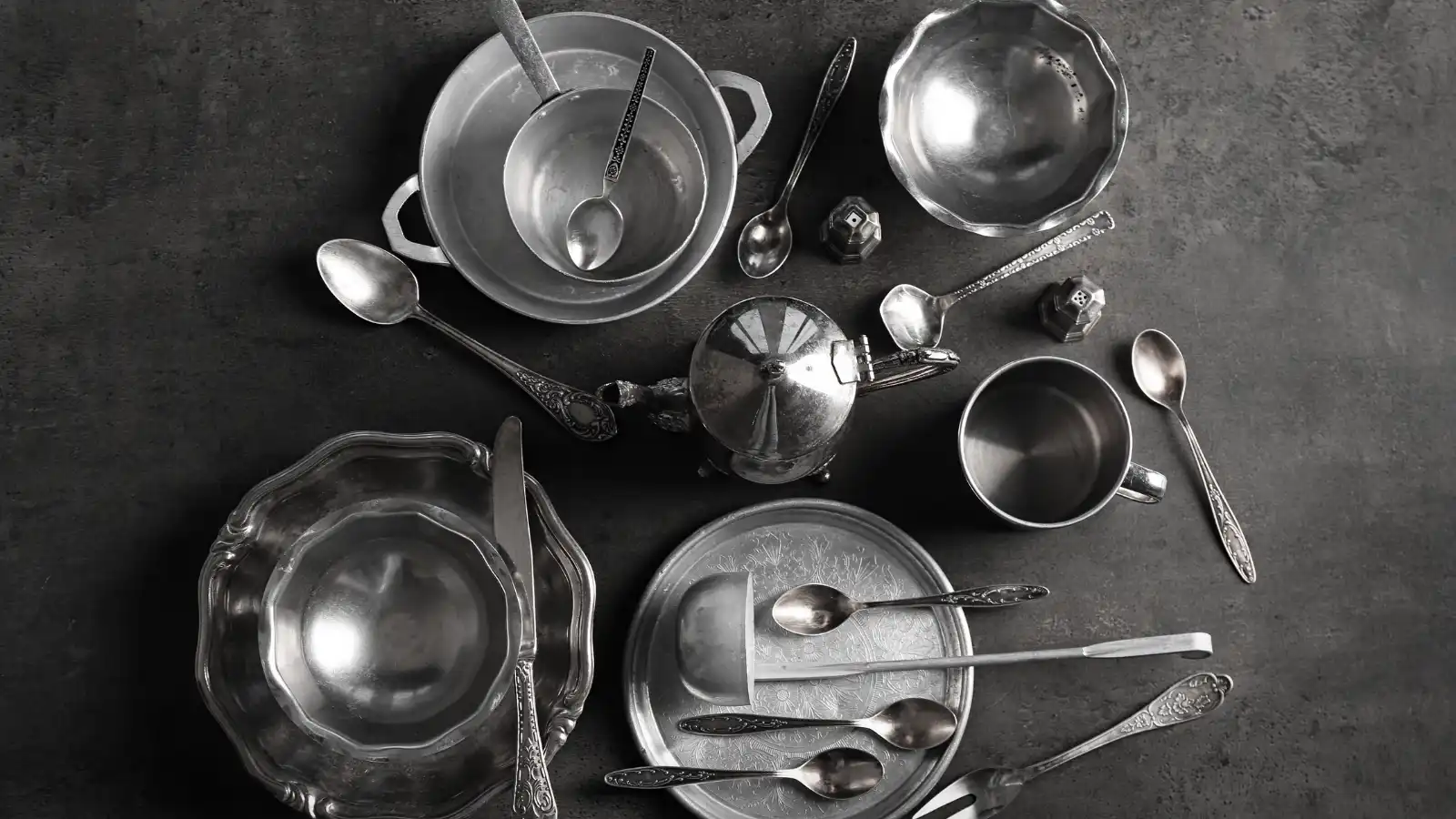
Most people discover potential wealth tucked away inside an old dining room sideboard or dusty attic box.
You might be clearing out a family estate, sorting through inherited serving pieces, or browsing a local thrift shop. You find heavy silver dishes resting in the corner, tarnished dark, holding impressive physical weight in your hands. Are these silver serving dishes an undiscovered fortune sitting on your counter, or just worthless pieces of polished decor?
That simple question represents a massive price difference between two completely different types of household items.
Silver plated dishes consist of cheap base metal coated in a microscopic skin of pure silver, carrying scrap value. Solid sterling silver dishes contain genuine precious metal throughout, meaning a single heavy dish can unlock real cash money. One is mass-produced dining decor, while the other represents actual physical silver wealth that trades on global spot markets.
Understanding this difference requires looking back at nineteenth-century industrial history and the rise of mass commercial electroplating.
During the Victorian era, manufacturing factories mastered cheap chemical plating techniques to replicate high-end luxury items for the public. This process allowed everyday consumers to buy shiny silver dishes without spending actual money on scarce precious metals. It saved physical silver bullion reserves for industrial applications, currency backing, and upper-class treasury holdings while flooding markets with illusions.
This diagnostic guide breaks down how to identify sterling silver hallmarks, spot base metal decoys, and secure actual market value.
Reading the Stamps (Sterling Hallmarks vs. Plated)
Genuine Sterling Silver Hallmarks
Your physical inspection always begins on the underside of the piece where manufacturers stamp tiny official factory hallmarks.
Solid sterling silver dishes made in North America almost always carry clear, unmistakable text or numeric purity stamps. Look closely for explicit words like “Sterling” or “Ster” clearly pressed directly into the flat surface metal. These stamps guarantee that the piece consists of ninety-two point five percent pure physical silver alloyed with copper.
European and antique pieces use standardized numeric markings or intricate pictorial purity stamps to indicate true metal content.
A stamp showing “.925”, “925”, or “925/1000” guarantees official sterling purity across modern international precious metal markets. British pieces feature traditional maker hallmarks, including the famous Lion Passant, a walking lion figure with one front paw raised. American pieces produced prior to eighteen sixty often bear the mark “Coin” or “900”, signaling ninety percent pure silver content.
A resource we’ll sometimes use to identify more rare stamps, check out the online encyclopedia of silver marks.
Silver Plate Markings (The Base Metal Decoys)
Manufacturers of plated silver dishes used clever stamping codes that frequently mislead casual buyers into assuming real silver value.
The most common stamp found on silver plated dishes is “EPNS”, which stands directly for Electroplated Nickel Silver. Do not let the word “silver” fool you, because nickel silver contains copper, zinc, and nickel, with zero solid silver. You will also spot abbreviations like “EP”, “EPC” for electroplated on copper, or “EPBM” for electroplated Britannia metal.
Commercial factories also stamped flowery descriptors onto base metal items to convince consumers of high physical quality.
Phrases like “Quadruple Plate”, “Triple Plate”, “Silvered”, or “Silver on Copper” sound impressive to an untrained reader. In reality, these terms merely describe how many times cheap base metal was dipped into an electroplating tank. They represent thin outer layers over base cores, rendering the piece effectively worthless for precious metal melt value.
If heavy silver dishes feature no stamped hallmarks whatsoever, you can assume they are silver plated base metal.
2 Reliable At-Home Tests (And Why to Avoid “Myth” Tests)
The Visual “Wear & Bleed-Through” Test
You can spot base metal cores quickly by looking closely at areas subject to friction and historical polishing.
Check the outer edges, handle joints, decorative rim borders, and heavily cleaned center bottoms of your silver dishes. As decades of hand polishing wear down thin outer silver skins, underlying base metals inevitably show through to the surface. If you see yellow brass, reddish copper, or dull grey metal peeking through, you own plated silver dishes.
The Heavy Magnet Test
Genuine solid sterling silver and underlying copper or nickel base alloys share a key physical trait: they are non-magnetic.
You can instantly eliminate cheap steel or iron cores by sliding a strong neodymium magnet across the main surface body. If the magnet firmly grips the flat dish floor or handles, the interior core consists of heavy structural iron. That magnetic draw proves one hundred percent that your serving piece is a silver-plated steel or iron alloy.

Why You Should Avoid the “Ice Cube” and “Tarnish Spot” Tests
Popular internet hacks often advise placing ice cubes on serving items to measure thermal conductivity and confirm silver content.
While silver conducts heat rapidly, copper and aluminum base metal cores conduct cold fast enough to easily deceive everyday testing. Plated copper dishes coated in thin silver will melt an ice cube almost as fast as solid sterling. Relying on ice melting speed leads people to misidentify cheap plated copper dishes as valuable physical silver assets.
Relying on surface tarnish spots to confirm metal content is another misleading mistake that leads to false conclusions.
Because silver plated serving dishes feature genuine silver on their outer skin, that top layer oxidizes into dark tarnish naturally. Plated items tarnish in identical dark shades, meaning surface tarnish alone reveals nothing about what lies beneath the surface. Professional non-destructive testing beats viral internet hacks every single time you want to evaluate real silver value accurately.
A client once brought in a set of heavy silver dishes convinced they were sterling because ice melted fast on them.
He had watched a viral video online and assumed the quick thermal transfer guaranteed thousands of dollars in melt value. We performed non-destructive spectrographic testing right in front of him, revealing a massive copper core underneath thin surface plating. The disappointment was real, highlighting why physical science and proper hallmarks matter far more than internet testing myths.
What Is Your Silver Worth & How Is It Evaluated?
Silver plated dishes carry virtually no melt value because recovering micro-thin surface silver costs more than the metal recovered.
Refiners cannot economically process electroplated items because the outer silver coating represents under one percent of total weight. The remaining ninety-nine percent consists of low-value base copper, zinc, or nickel that refiners reject for precious metal recovery. Consequently, silver plated serving dishes sell purely as secondhand home decor or base scrap metal, yielding nominal value by weight.
Solid sterling silver dishes derive immediate cash value directly from physical precious metal spot prices traded on global markets.
| Metal Type | Composition | Value Basis | Typical Scrap Cash Value |
| Silver Plated Dishes (EPNS/EP) | Base core with micro-thin coating | Base scrap weight (copper/brass) | Nominal ( Maybe $2 to $5 total) |
| Sterling Silver Dishes (.925) | 92.5% solid silver alloy | Troy ounces of pure silver content | Hundreds of dollars per item |
Evaluating true sterling value requires weighing the piece in troy ounces, where one troy ounce equals thirty-one point one grams.
You calculate raw melt value by multiplying total weight in troy ounces by zero point nine two five purity. You then multiply that pure silver weight by current physical silver spot prices to find exact raw metal value. For example, heavy sterling silver dishes weighing forty troy ounces contain over thirty-seven troy ounces of pure silver.
Turn Your Precious Metals Into Real Cash Value
Do not let genuine precious metal sit forgotten in sideboards or risk donating valuable sterling dishes by mistake.
Inspect your serving pieces carefully for explicit numeric stamps like “925” or official hallmarks like the British Lion. Watch out for misleading decoy stamps such as “EPNS”, and avoid relying on unpredictable DIY ice cube tests. When you spot genuine hallmarks, taking your metal to proven experts ensures you receive top dollar for physical assets.
The Gold Guys provide free, professional non-destructive spectrographic testing to verify silver content accurately within seconds.
If you live in Minnesota, visit one of our convenient store locations for an immediate physical evaluation. You receive an honest, transparent appraisal and immediate payout based directly on live physical precious metal spot prices.
If you live outside our retail store regions, you can easily access our trusted precious metal valuation services nationwide.
Request a free, insured Mail-In Kit directly through our website to ship your sliver flatware safely to us (for large silver dishes and platters, call our woodbury store first, and they can guide you over the phone if your items are sterling or not). Pack your dishes, flatware, or old jewelry securely, and our expert assayers will test everything for true purity. You receive a risk-free quote with zero obligation, giving you complete control over turning household items into cash.
Frequently Asked Questions
How much is a silver-plated dish worth?
Plated dishes carry virtually zero precious metal recovery value because chemical stripping costs exceed the extracted silver value.
The micro-thin surface layer contains less than one percent silver content relative to the heavy base metal interior. Refiners reject these items because processing copper, brass, or nickel alloys yields no economic profit for precious metal recovery. Therefore, silver plated dishes hold value purely as decorative household goods or low-grade base scrap sold by weight.
What does EPNS mean on the back of a silver dish?
EPNS stands directly for Electroplated Nickel Silver, which describes a specific base metal alloy formulation under silver plating.
Despite using the word “silver” in its name, nickel silver consists entirely of copper, zinc, and nickel metal. The underlying core contains zero solid silver, meaning the item receives only a microscopic exterior silver skin. Seeing EPNS stamped on your serving dish confirms that the piece carries no physical melt value.
Can you melt down silver-plated items for pure silver?
Refiners do not melt silver-plated dishes for bullion because the silver content is far too thin to recover profitably.
Stripping the outer layer requires expensive chemical baths and labor that far outstrip the tiny fraction of recovered metal. The vast majority of the dish consists of non-precious metals that create useless slag during thermal processing. For these practical processing reasons, precious metal buyers only purchase solid sterling items for melting purposes.
How can I test silver dishes at home without damaging them?
The safest non-destructive method involves inspecting high-friction zones like handles and rims for underlying brass or copper show-through.
You should also use a strong neodymium magnet to ensure the main core contains no magnetic steel or iron. Finally, use a magnifying glass to locate explicit purity hallmarks like “925”, “Sterling”, or British Lion Passant stamps. Skip the misleading internet ice cube hacks, as copper and base metals transfer cold fast enough to deceive you.
Where can I get my silver dishes tested for free?
You can bring your serving pieces into any Gold Guys retail location or request a free Mail-In Kit online.
Our expert team provides non-destructive spectrographic testing to determine exact precious metal purity without scratching or damaging items. We evaluate your pieces right in front of you using calibrated scientific devices to confirm real sterling content. You receive a complete evaluation with zero hidden fees or obligation to sell your items.