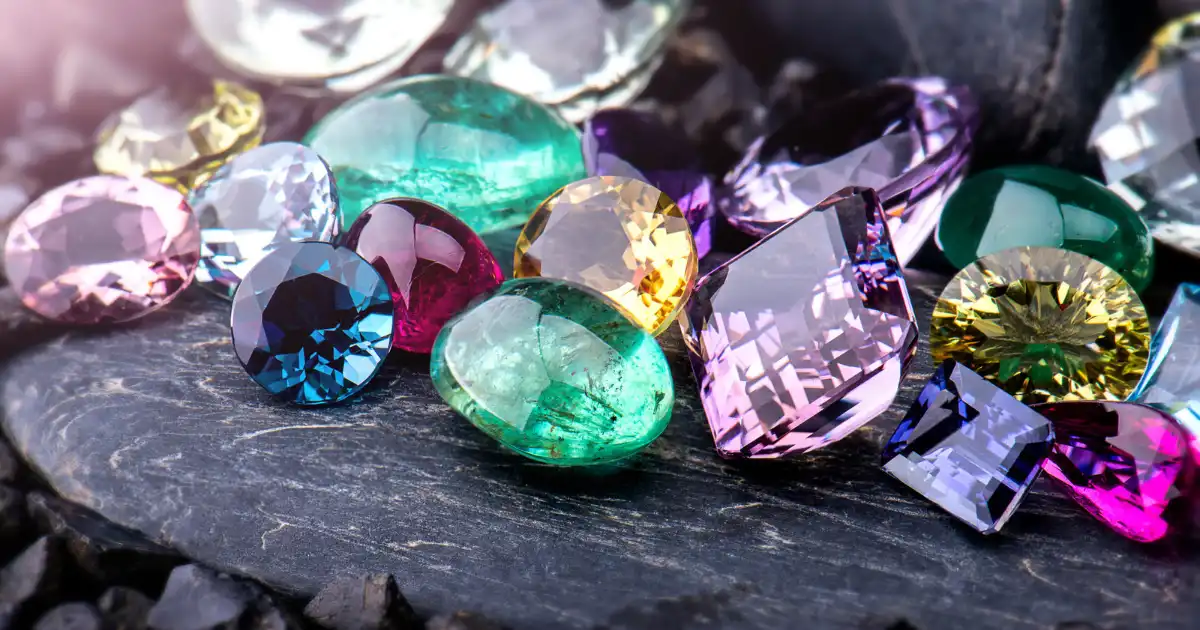
Walking out of a retail jewelry store with a bright amethyst ring feels like a major financial investment.
You spent thousands of dollars on a custom piece containing a heavy metal band and a stunning colorful stone. Yet when you try selling gemstone jewelry for gold value years later, a precious metals buyer only offers cash for the raw metal weight. The realization that your centerpiece gemstone adds no real cash payout to the final transaction often creates immediate shock.
When selling jewelry on the secondary market, payouts depend almost entirely on raw material liquidity. Semi-precious stones and commercial diamonds carry near-zero resale value due to vast wholesale supply and high recutting costs.
At The Gold Guys, we believe in complete transparency regarding how secondary markets calculate physical metal values.
We don’t buy semi-precious stones (anything that’s not a diamond) because they don’t have a secondary market to process them. (However, our team will happily remove your stones upon request before weighing your items.)
Understanding the difference between retail markups and physical commodity value helps you maximize cash payouts on old items.
The Economics of Jewelry, Retail Illusion vs. Raw Material Reality
Physical gold, silver, and platinum have live spot prices that trade globally every second of the day.
An ounce of 14k gold can be melted down, refined, and repurposed into bullion or industrial products instantly. This constant global demand creates immediate liquidity for anyone holding scrap precious metal items in hand. Conversely, semi-precious stones like citrine, peridot, topaz, garnet, ruby, sapphire, and emerald lack a centralized commodity market.
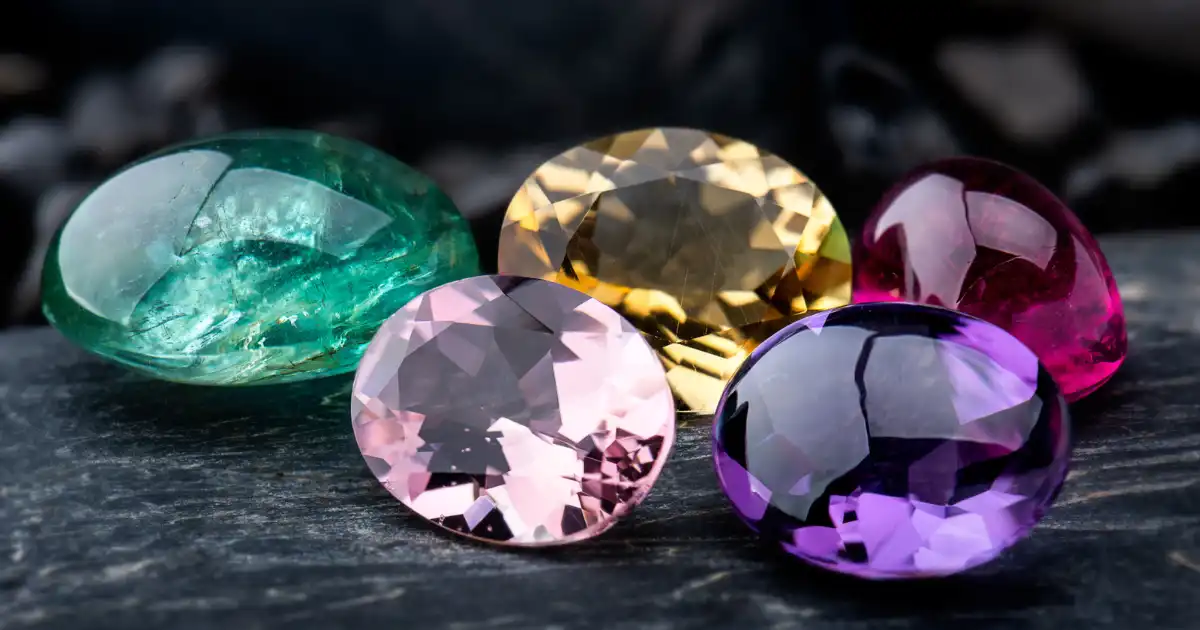
Retail jewelry prices hide massive operational overhead costs and business profit margins that disappear the moment you leave the store.
When you spend a thousand dollars on a retail ring, you pay for CAD design, casting, and bench labor. You are also funding expensive showroom rent, sales staff commissions, marketing campaigns, and wholesale stone settings bought in bulk. The moment a piece enters the secondary market, those design costs and retail markups vanish completely. You are left strictly with the raw commodity weight of the physical precious metal.
A customer once brought an inherited white gold cocktail ring to our counter with a certified retail appraisal of twenty-five hundred dollars.
She expected a cash payout close to that appraisal figure, only to discover twenty-two hundred dollars covered original retail overhead. The actual melt value of the gold was worth two hundred and fifty dollars, while the massive center gem held zero wholesale market demand.
Why Semi-Precious Stones Have Near-Zero Resale Value
Industrial mining operations yield massive quantities of commercial quartz, beryl, and garnet varieties across the globe every year.
Uncut rough gemstones cost wholesale lapidaries fractions of a cent per carat when purchased in massive bulk shipments. Because the global supply of raw colorful minerals remains virtually unlimited, secondary buyers have no incentive to buy pre-owned gems. Asking why do semi precious stones have no resale value comes down to basic industrial supply and demand.
Removing a gemstone from a set ring without chipping the delicate facets requires precise, time-consuming bench labor.
Once removed, a jeweler must inspect, polish, and re-grade that loose stone before it can ever be resold. Paying a skilled goldsmith hourly labor to extract and re-polish a used gemstone costs more than buying a brand-new factory stone. Also, pre-owned estate stones feature non-standard millimeter dimensions that rarely fit standard commercial ring settings. Unlike uniform gold purities, fitting a custom-cut estate stone into a stock setting requires expensive bench adjustments.
Most manufacturers prefer buying new, perfectly calibrated factory stones rather than spending money adapting older, irregular gems.

The Diamond Reality, Why Most Small Diamonds Aren’t Worth What You Think
Most consumers assume every diamond holds automatic generational wealth, but the secondary market behaves very differently.
While top-tier investment diamonds featuring certified high clarity grades hold strong secondary value (I’ve seen multi-carat stones sell for over $10,000), most commercial estate stones tell a different story. The vast majority of diamond accent stones embedded in everyday jewelry belong to a category known as melee diamonds.
Small accent diamonds surrounding a center stone are purchased by manufacturers in bulk parcels for tiny wholesale prices.
When asking do gold buyers pay for gemstones, small diamonds carry very modest scrap valuations compared to original retail tags. On the secondary market, commercial diamond melee prices often range between $1 and $50 based on quality, with most ranging from $1 to $10.
The explosion of high-quality lab-grown diamonds has disrupted the diamond secondary market value even further.
Lab-created alternatives offer consumers nearly flawless optical brilliance and identical chemical structures for a fraction of the cost of mined stones. This massive influx of affordable lab-grown inventory has suppressed secondary demand for small, commercial-grade natural diamonds even more.
Selling Gold Jewelry to The Gold Guys, How Stone Weight Works
When you bring items to us, we calculate payouts using accurate precious metal weight minus non-precious materials.
Because payouts reflect live market spot prices for pure gold, silver, or platinum, stone weight must be deducted during evaluation. This ensures you receive an exact payout for your actual metal without paying gold rates for glass, enamel, or heavy minerals.
If you are wondering will precious metal buyers remove stones from gold rings, our team provides that service free upon request.
If you bring in a sentimental ring where the center gem holds emotional value, we will do our best to pop the stones out for you.
You retain complete ownership of your gems while receiving maximum liquid value for the surrounding precious metal.
There are many creative ways to utilize your loose gemstones after selling gold rings with stones for scrap cash.
You can preserve them inside family heirloom chests or pass them down to children as personal birthstone keepsakes. Alternatively, you can take those loose gems to a custom bench jeweler to build brand-new silver or gold settings later on.
Frequently Asked Questions
Why don’t gold buyers pay for semi-precious stones like amethysts or sapphires?
Gold buyers pay for liquid raw materials that can be instantly refined on global spot markets. Because extracting, regrading, and resetting pre-owned gems costs more than buying new factory-cut stones wholesale, no secondary market exists for them.
Can I keep my gemstones when I sell my gold ring to The Gold Guys?
Yes, our team will safely remove your stones upon request before calculating the final weight of your precious metal. This allows you to walk away with instant cash for your metal while keeping your favorite gems intact.
How much are the small diamonds in my ring worth when selling for scrap?
Commercial-grade accent diamonds generally fetch between one dollar and fifty dollars on the secondary market depending on carat, color, cut, and clarity. Jewelers purchase these tiny accent stones in bulk parcels at extremely low wholesale rates, which keeps secondary payouts modest.
Will removing the stone lower the value of my jewelry when selling to a gold buyer?
No, precious metal buyers calculate payouts strictly on the pure weight and karat purity of the metal itself. Removing non-precious stones isolates the true weight of your gold so you receive an accurate market payout.
Retail jewelry tags reflect artistic design and store overhead, but secondary market payouts reflect true physical commodities. While colorful gemstones lack secondary wholesale liquidity, the gold, silver, or platinum holding them maintains real intrinsic wealth.
Have old jewelry sitting forgotten inside your dresser drawers? Stop by one of our Gold Guys locations or request a hassle-free Mail-In Kit today to turn your precious metal items into instant cash, and keep your favorite stones upon request.