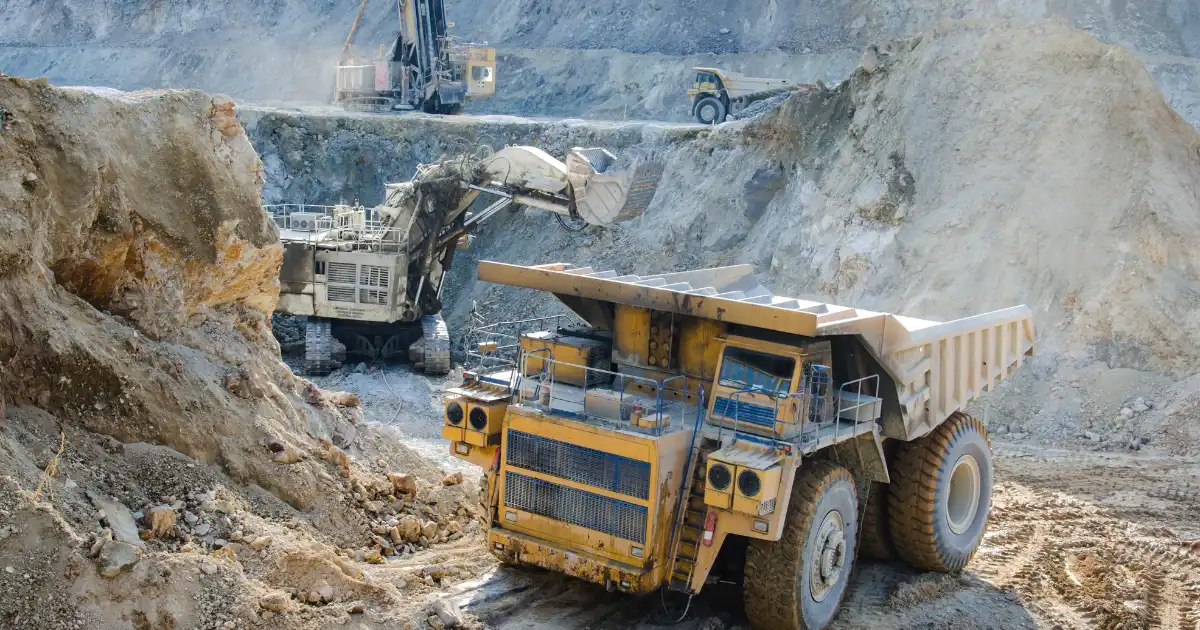
Every few months, a headline catches your attention about a massive new gold discovery or a promising mining update.
It sounds like the company is on the verge of pouring pure metal, leading most people to wonder: how long does it actually take for a newly discovered dig site to start producing physical gold?
The short answer: globally, it takes 10 to 16+ years, and up to 29 years in bureaucratic jurisdictions like the United States, from initial discovery to the first commercial pour.
While central banks print trillions in paper currency with a single keypress, real metal requires decades of grinding effort.
Understanding this multi-decade gap reveals an uncomfortable truth: physical gold supply is completely inelastic, exposing why paper derivative markets are so leveraged and why recycled metal keeps the financial engine running.
To truly understand why hard money holds its ground against inflation, we have to look behind the headlines and trace the brutal, step-by-step journey of how a gold mine comes into existence.
Phase 1: Exploration & Discovery (Years 1 – 10)
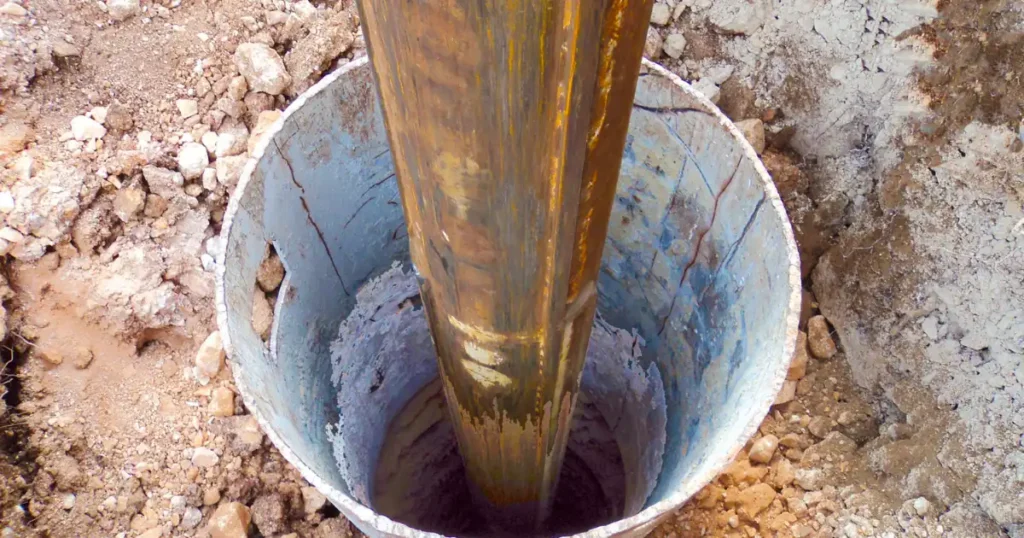
Geologists search thousands of square miles of unforgiving terrain just to locate microscopic geochemical anomalies.
They rely on satellite imagery, airborne magnetic scans, soil chemistry, and diamond core drilling to map subsurface structures. Thousands of meters of rock are pulled from deep underground, sliced open, and sent to laboratories to measure gold concentrations in parts per million.
Fewer than 1 in 1,000 prospective exploration sites ever become an operating precious metals mine. Over 99.9% of exploration budgets yield absolutely zero financial return, leaving companies with nothing to show for years of hard labor.
Grassroots exploration spending has plummeted from roughly 50% of corporate mining budgets in the 1990s to under 20% today. Major mining conglomerates now rely on junior miners to take initial risks, resulting in a dramatic drop in major new high-grade discoveries worldwide.
Mining exploration is not a casual corporate venture; it is a high-stakes gamble against raw nature. A junior exploration firm can easily burn through $10 million to $50 million simply drilling test holes into solid rock without ever proving a viable deposit exists.
Phase 2: De-Risking & Feasibility Studies (Years 8 – 12)
Finding gold in the ground means nothing if you cannot extract it at a sustainable profit.
Geologists and metallurgists must prove the economic viability of a deposit under rigorous international reporting standards like NI 43-101 or JORC. They run complex simulations to determine if the metal can be extracted without bankrupting the operating company.
Engineering validation progresses through three distinct, capital-intensive technical stages:
- Preliminary Economic Assessment (PEA): An early-stage conceptual evaluation of potential mining methods, rough capital requirements, and projected cash flows.
- Pre-Feasibility Study (PFS): A detailed technical audit selecting specific mining methods, estimating metallurgical recovery rates through cyanide leaching or flotation, and mapping out regional infrastructure requirements.
- Definitive / Bankable Feasibility Study (BFS): The comprehensive engineering blueprint required to convince institutional lenders to underwrite hundreds of millions of dollars in project debt.

Phase 3: Permitting Red Tape & “Social License” (Years 10 – 14)
Navigating modern government bureaucracy is often more challenging than cutting through solid granite.
Mining entities must prepare exhaustive Environmental Impact Assessments to address complex water management systems, chemical handling procedures, and wildlife protection plans. State and federal agencies analyze potential acid rock drainage and heavy metal containment for years before issuing a single permit.
In developed nations like the U.S. and Canada, securing federal, state, and local regulatory permits alone regularly consumes 7 to 10+ years.
A project cannot move forward simply because a government agency stamps a stack of environmental paperwork. Developers must earn a “Social License to Operate” by negotiating binding legal agreements with local communities and Indigenous populations.
If a mining company fails to secure genuine community buy-in, endless court challenges and blockades can freeze a billion-dollar asset indefinitely.

Phase 4: Mine Construction & First Pour (Years 13 – 16+)
Transforming a proven geological deposit into an operational industrial complex requires massive structural engineering.
Crews must construct high-capacity ore crushers, grinding mills, chemical leach circuits, tailings containment facilities, high-voltage power lines, and advanced industrial water treatment plants. Access roads must be cut through mountains or jungles just to transport massive haul trucks and heavy machinery to the site.
Initial build costs routinely range from $500 million to over $2 billion before a single ounce of commercial gold is produced.
|
Phase |
Core Activities |
Timeline |
|
Phase 1: Exploration & Discovery |
Magnetics, core drilling, geochemical mapping |
Years 1 – 10 |
|
Phase 2: Feasibility Studies |
PEA, PFS, and Bankable Feasibility Studies |
Years 8 – 12 |
|
Phase 3: Permitting & Compliance |
Environmental reviews, local community approvals |
Years 10 – 14 |
|
Phase 4: Construction & Mining |
Heavy industrial build, milling, initial metal pour |
Years 13 – 16+ |
The culmination of this multi-decade effort occurs inside the secure melt house during the initial metal pour.
Ore is processed and smelted on-site into unrefined, semi-pure doré bars containing a mixture of gold and silver. These heavy bars are immediately shipped under armed escort to commercial refineries for final purification into 99.99% investment-grade bullion.
The Economic Reality: Fiat Money vs. Physical Friction
Central banks can print paper currency endlessly, but they cannot print the physical laws of chemistry and geology.
When gold prices climb, mining corporations can’t simply open a valve to pump out additional physical metal. The lead time required to bring new physical supply to the market takes well over a decade, making real-world supply completely inelastic.
Financiers create hundreds of paper contracts on exchanges like the COMEX for every single physical ounce residing inside vault doors. This paper leverage obscures true physical supply and demand dynamics, allowing central banks and bullion banks to “synthesize” supply out of thin air.
Peak gold is an emerging physical reality. Discoveries of massive, high-grade ore deposits peaked in the late 1990s, forcing modern operators to mine deeper, lower-grade deposits that require complex processing.
While mining companies spend fifteen years battling regulators and moving mountains to produce raw gold, localized metal recycling operates at immediate speed. A customer can walk into a local store with broken jewelry and convert it into pure, circulating market liquidity in under fifteen minutes.
Why Above-Ground Recycling is Vital to Global Supply
Recycled metal serves as the primary pressure-relief valve for the global physical market.
Recycled gold accounts for roughly 25% to 30% of total annual global supply, providing immediate physical liquidity during sudden demand spikes. Without existing secondary metal supplies, global commercial refiners would face constant physical structural shortages.
Refining existing secondary scrap metal consumes a small fraction of the energy, water, and chemical inputs required to excavate thousands of tons of raw ore.
Ready to take action in the physical metal market?
- Sell Unwanted Metal: Have old, broken, or scrap gold jewelry sitting in a drawer? Reintroduce real value into the market today. Stop into one of our Minnesota locations or request a free, secure Mail-In Kit from The Gold Guys.
- Buy Physical Bullion: Want to protect your purchasing power with real, hard assets that can’t be printed or inflated? Visit goldguysbullion.com to buy physical gold and silver bullion directly.
- Stay Informed: Want to learn more about real economics and physical precious metals? Sign up for our free newsletter to receive expert market breakdowns directly to your inbox.
Frequently Asked Questions
What is the average time it takes to open a gold mine from discovery to production?
Globally, it takes an average of 15 to 16 years to bring a gold mine from initial discovery into commercial production. In restrictive jurisdictions like the United States, permitting delays can stretch the development timeline to 29 years.
What percentage of gold exploration projects actually become operating mines?
Fewer than 0.1% (less than 1 in 1,000) of prospective exploration sites ever yield a commercially viable physical deposit that turns into a producing mine.
Why can’t mining companies just mine more gold when the price goes up?
Gold mine supply is highly inelastic. Increasing output requires expanding existing open pits or financing new underground mines, which requires billions of dollars in capital expenditure and over a decade of lead time.
How does recycled gold compare to newly mined gold?
Chemically and atomically, refined gold is completely identical regardless of its origin point. Recycled gold provides rapid physical liquidity to the market without the multi-year delays or environmental footprint of raw ore extraction.
Physical precious metals retain real purchasing power precisely because the earth does not give up its treasures easily. Every coin or bullion bar sitting in a vault represents decades of risk, human labor, and capital investment.
Because opening a physical mine takes decades, secondary physical recycling remains essential to keeping the physical market moving.