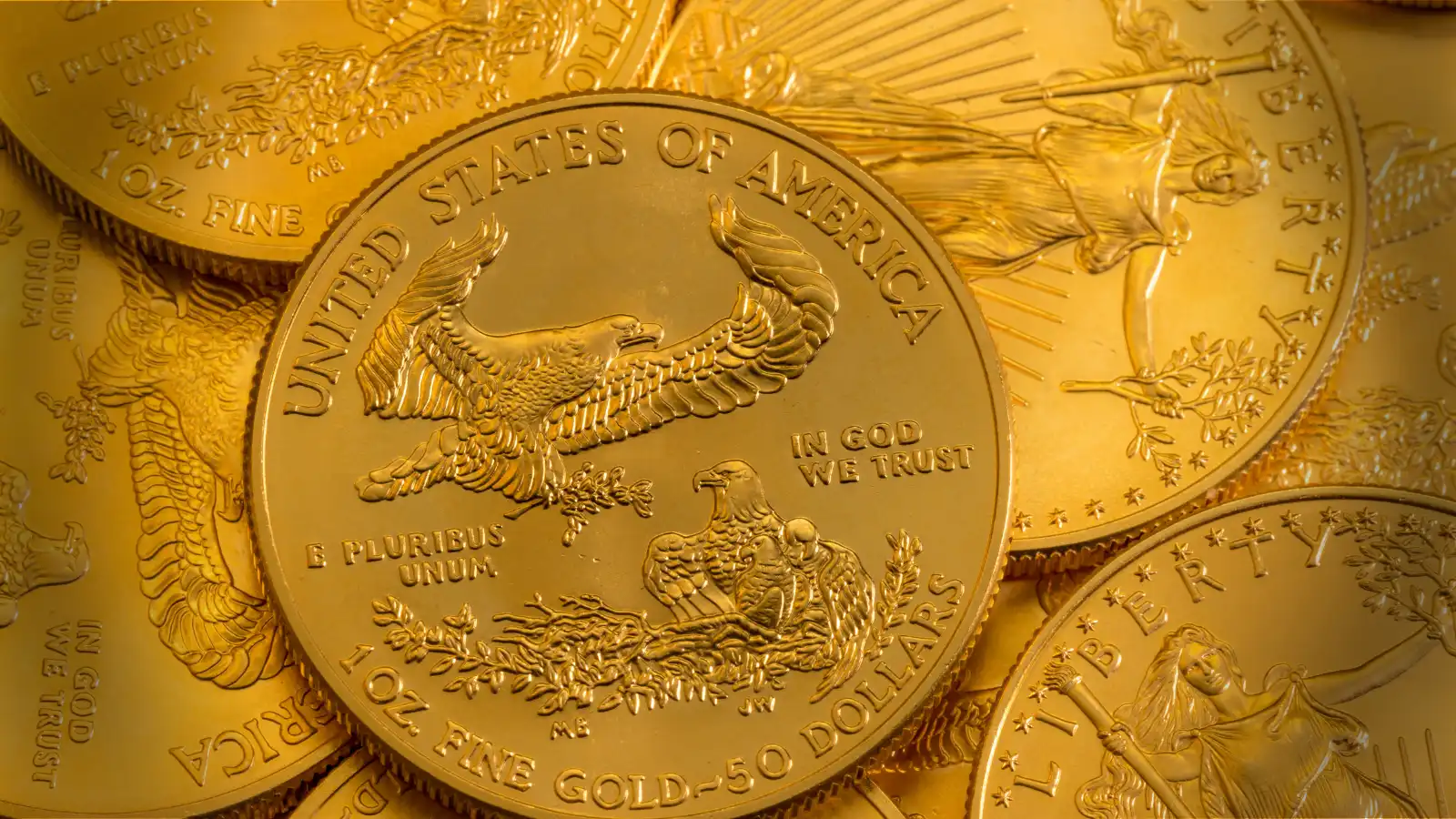
Gold is not just an asset sitting on a screen, it is physical money with a track record spanning five millennia.
When paper currencies eventually inflate into oblivion, tangible gold remains standing because sovereign debt systems cannot print physical elemental mass. Yet when you hold American physical gold in your hand, you quickly realize that not all stamped coins carry equal purchasing weight.
Many inherited-asset sellers assume an old coin is automatically worth a fortune over its raw weight.
Others fall into the common trap of assuming every historical twenty-dollar gold piece contains a full troy ounce of fine gold. The reality of physical precious metals requires a much sharper look at how government minting policies actually work.
Understanding the three major categories of sovereign US coinage reveals how history, federal mandates, and real supply-and-demand mechanics dictate cash value.
| Coin Category | Alloy Composition | Fine Gold Content ($20 / 1 oz) | Core Value Driver |
| Pre-33 Circulation | 90% Gold / 10% Copper (21.6k) | 0.9675 troy oz | Historical Scarcity & Melt Weight |
| Modern Sovereign Bullion | 22k (Eagle) or 24k (Buffalo) | Exactly 1.000 troy oz | Spot Price & High Retail Liquidity |
| High Relief / Numismatic | 24k Fine or Historical Proof | Varies (0.9675 oz to 1.000 oz) | Collector Scarcity & Third-Party Grade |
A customer once walked into our shop carrying a velvet-lined box of raw Pre-33 coins left behind by his grandfather.
He was convinced each piece was an exact one-ounce unit of pure twenty-four-karat gold, ready to multiply against the daily spot price. I had to gently break down the historic metallurgical math, showing him that his classic double eagles were actually ninety percent gold alloy containing precisely 0.9675 troy ounces of fine metal.
The Great Monetary Divide: Pre-33 vs. Modern US Gold
During the hard money era between 1792 and 1933, American currency was tied directly to real gold and silver.
Paper bills were not endless debt claims backed by promises, but actual warehouse receipts redeemable for physical specie on demand. That real-world anchor kept the purchasing power of the dollar stable for over a century while forcing fiscal discipline on government spending.
Everything changed on April 5, 1933, when President Franklin D. Roosevelt signed Executive Order 6102.
The federal order criminalized private ownership of gold coin, bullion, and paper certificates, forcing citizens to surrender their holdings for twenty dollars and sixty-seven cents per ounce. The government promptly melted millions of circulating double eagles into massive four-hundred-ounce bars, giving birth to the central reserve vaults at Fort Knox.
Yet a crucial clause tucked into Section 2(b) spared specific coins from the federal furnace.
The order granted an explicit exemption for gold coins possessing a recognized special value to collectors of rare and unusual pieces. That legal exemption allowed historical family heirlooms to survive in secret, creating what we now trade as the Pre-33 market.
The central difference between vintage and modern sovereign issues comes down to metal composition.
Pre-33 coins were alloyed with ten percent copper to withstand the harsh physical abrasion of daily commercial hand-to-hand trade. Modern bullion coins like the Gold Eagle use silver and copper to achieve durability, while the Gold Buffalo offers pure twenty-four-karat metal.
Pre-33 Circulated US Gold Coins (1795–1933)
Liberty Head Series (1838–1907)
Designed by Chief Engraver James B. Longacre, the Liberty Head series represents the workhorse money of nineteenth-century American commerce.
Featuring a Coronet Liberty on the obverse and a classic heraldic eagle on the reverse, these coins built the nation’s industrial infrastructure. The series spans key denominations including the $2.50 Quarter Eagle, $5 Half Eagle, $10 Eagle, and $20 Double Eagle.
Investors love the rugged aesthetic of Liberty Heads because they carry authentic wear from real historic markets.
-
$2.50 Quarter Eagle: Struck as a compact commerce unit containing 0.1209 troy oz of fine gold.
-
$5.00 Half Eagle: The backbone of everyday commercial transactions carrying 0.2419 troy oz of fine gold.
-
$10.00 Eagle: Heavy merchant trade coin containing 0.4837 troy oz of fine gold.
-
$20.00 Double Eagle: The primary banking reserve asset holding 0.9675 troy oz of fine gold.
Indian Head Series (1907–1933)
The ten-dollar Indian Head Eagle was brought to life by legendary sculptor Augustus Saint-Gaudens at the personal request of President Theodore Roosevelt.
It features Lady Liberty wearing a feather
war bonnet on the front, paired with a proud standing eagle on the back. Meanwhile, the smaller $2.50 and $5 versions created by Bela Lyon Pratt took an entirely different design path.
These smaller Indian Heads feature an incuse design, meaning the artwork is sunken below the flat field of the coin.
Unlike standard raised-relief coins where artwork extends above the protective outer rim, an incuse coin keeps its high points flush with or below the field. This unique design decision protected the intricate details of the Native American profile from physical abrasion as coins passed through daily commerce.
This incuse technique was the only time the United States Mint created coins with recessed features, protecting the detail from wearing down over time.
Saint-Gaudens Double Eagle ($20 Face Value) (1907–1933)
Commissioned to elevate American money to the artistic heights of ancient Greece, the Saint-Gaudens Double Eagle is globally recognized as a sculptural masterpiece.
It displays Lady Liberty striding forward against sunbeams with a torch and olive branch, while a majestic eagle soars across the reverse. Yet behind its legendary beauty lies a critical technical reality every buyer and seller must understand.
The total physical weight of a Saint-Gaudens double eagle is 33.436 grams, or 1.075 troy ounces.
Because the coin is nine-tenths gold and one-tenth copper, its actual fine gold content equals exactly 0.9675 troy ounces. Buying or selling one under the assumption that it holds a full troy ounce of pure metal leads to immediate accounting errors.
Modern Sovereign Bullion Coins (1986–Present)
American Gold Eagle (1986–Present)
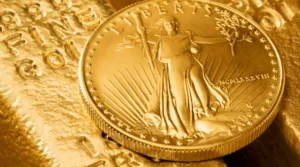
Authorized by Congress to give stackers a trusted sovereign option, the American Gold Eagle remains the most popular coin in the country.
Struck in twenty-two-karat crown gold, its metal ratio contains 91.67 percent gold, 3% silver, and 5.33% copper. The US Mint adds extra alloy so that the coin contains one full troy ounce of fine gold while weighing 1.09 troy ounces overall.
Its face displays Saint-Gaudens’ Liberty, while the back features the classic family of eagles on Type 1 issues or the close-up portrait on Type 2 pieces.
American Gold Buffalo (2006–Present)
To compete directly with foreign twenty-four-karat coins like the Canadian Gold Maple Leaf, the US Mint introduced the Gold Buffalo in 2006.
Struck in 99.99% percent fine gold, this coin contains exactly one troy ounce of pure gold with no base metal added. Its artwork mirrors James Earle Fraser’s classic 1913 Buffalo Nickel, displaying a Native American chieftain profile opposite an American bison.
The Gold Buffalo offers buyers pure twenty-four-karat content backed directly by the government for weight and purity.

High Relief & Numismatic Collector Coins
Historic High Relief (1907 Original Issues)
The original 1907 high relief double eagles produced by Saint-Gaudens pushed coining technology past its absolute limits.
The coin’s relief was so dramatic that the press required up to nine heavy hydraulic strikes to bring out the complete detail. Because the mint could not efficiently manufacture such complex pieces for commercial trade, production was halted after striking roughly twelve thousand units.
Today, these rare original high relief issues command massive premiums that trade entirely on collector rarity rather than raw metal weight.
Standard commercial business strikes require only a single high-speed press strike to stamp designs onto flat planchets. High relief coins force planchet metal deep into dies under extreme pressure, creating rich sculptural detail that makes high-volume coining impossible.
Those remaining original pieces represent ultra-rare physical artifacts that command massive prices at auction.
Modern High Relief & Special Proof Commemoratives
In 2009, the United States Mint used digital metal pressing to realize Saint-Gaudens’ original vision without production defects.
The result was the 2009 Ultra High Relief twenty-dollar gold piece, struck in pure twenty-four-karat metal. Later releases, like the American Liberty High Relief series, continue to offer modern artistic interpretations for specialized collectors.
However, buyers must watch out for the collector trap when buying modern commemorative issues.
High upfront mint markups mean their resale value depends heavily on third-party grading slabs from PCGS or NGC, population reports, and shifting collector demand. If spot prices rise while collector interest fades, high-premium commemoratives can underperform basic bullion coins.
Why Modern Bullion Outperforms Raw Pre-33 in Payout Percentage
A seller recently came into our shop with a worn $20 Liberty Head and a scratched 1 oz Gold Buffalo, amazed that the scratched Buffalo received a higher percentage payout relative to its fine gold weight.
I showed him how local retail liquidity, metal purity testing, and refining logistics dictate buy-back pricing on shop counters. Once he saw how fast modern bullion resells compared to raw historical coins, the price difference made total sense.
| Resale Factor | Modern Sovereign Bullion | Raw Pre-33 Circulated Gold |
| Fine Gold Calculation | Exact 1.000 troy oz (zero conversion needed) | 0.9675 troy oz ($20 piece base weight) |
| Counter Verification | Instant electromagnetic / XRF surface scan | Weight, caliper, and optical surface evaluation |
| Retail Resale Demand | Immediate local counter resale to next buyer | Niche buyer market unless submitted for grading |
| Grading Overhead | Unnecessary (valued strictly on metal mass) | Requires PCGS/NGC slabs to capture collector value |
| Dealer Buy-Back Margin | Ultra-tight spread | Wider margin due to melt or grading overhead |
Modern Eagles and Buffalos fetch higher payout percentages because they contain a standardized one-troy-ounce weight that requires zero math.
Dealers verify modern bullion instantly using electromagnetic wave tools or XRF analyzers without touching the metal with destructive acids. Because retail buyers buy modern 1 oz coins off dealer shelves every day, shop owners keep buy-back margins thin.
Raw Pre-33 coins earn lower percentage payouts because the melt calculation starts at 0.9675 ounces rather than a full ounce.
Uncertified vintage coins carry hidden risks like past cleaning, altered surfaces, or physical weight loss from decades of pocket wear. Unlocking true numismatic value requires shipping pieces to grading services, paying insurance fees, and waiting weeks for professional authentication.
Summary & Actionable Steps
Understanding gold coins comes down to matching your personal wealth strategy with the right physical metal format.
Pre-33 coins offer real history and ninety percent gold content, carrying 0.9675 ounces of fine metal in a twenty-dollar double eagle. Modern Eagles and Buffalos deliver max liquidity, simple one-ounce math, and the highest payout percentage when it comes time to liquidate.
Whether you want to build a private store of sovereign metal or sell an inherited collection of classic coins, transparency comes first.
If you are looking to sell precious metals, drop by a Gold Guys counter or request a secure Mail-In Gold Kit for an immediate appraisal.
If you want to buy bullion, visit GoldGuysBullion.com to view investment-grade physical gold and silver delivered straight to your door.
You can also sign up for our free email course, Sound Money 101, to learn how physical precious metals protect your purchasing power in a paper world.
Frequently Asked Questions
Is it legal to own Pre-33 US gold coins today?
Yes. Executive Order 6102 was completely repealed by President Gerald Ford in 1974. Americans can legally buy, hold, and sell any Pre-33 or modern gold coin without legal restriction.
Why isn’t a $20 Saint-Gaudens or Liberty Head gold coin a full troy ounce?
Under the historic US Gold Standard, gold was fixed at $20.67 per troy ounce. A twenty-dollar face value coin was minted to contain exactly 0.9675 troy ounces of fine gold, alloyed with 10% copper for durability.
Which US gold coin is best for pure investment?
For maximum payout percentage upon resale and simple tracking, American Gold Buffalos (24k) and American Gold Eagles (22k) are ideal due to high retail demand, tight buy-back spreads, and standardized 1 oz fine gold weights.
Should I clean my old Pre-33 gold coins before selling them?
Never clean historical gold coins. Abrasive wiping creates micro-scratches that strip away original mint luster, which can destroy hundreds or thousands of dollars in genuine collector value.