
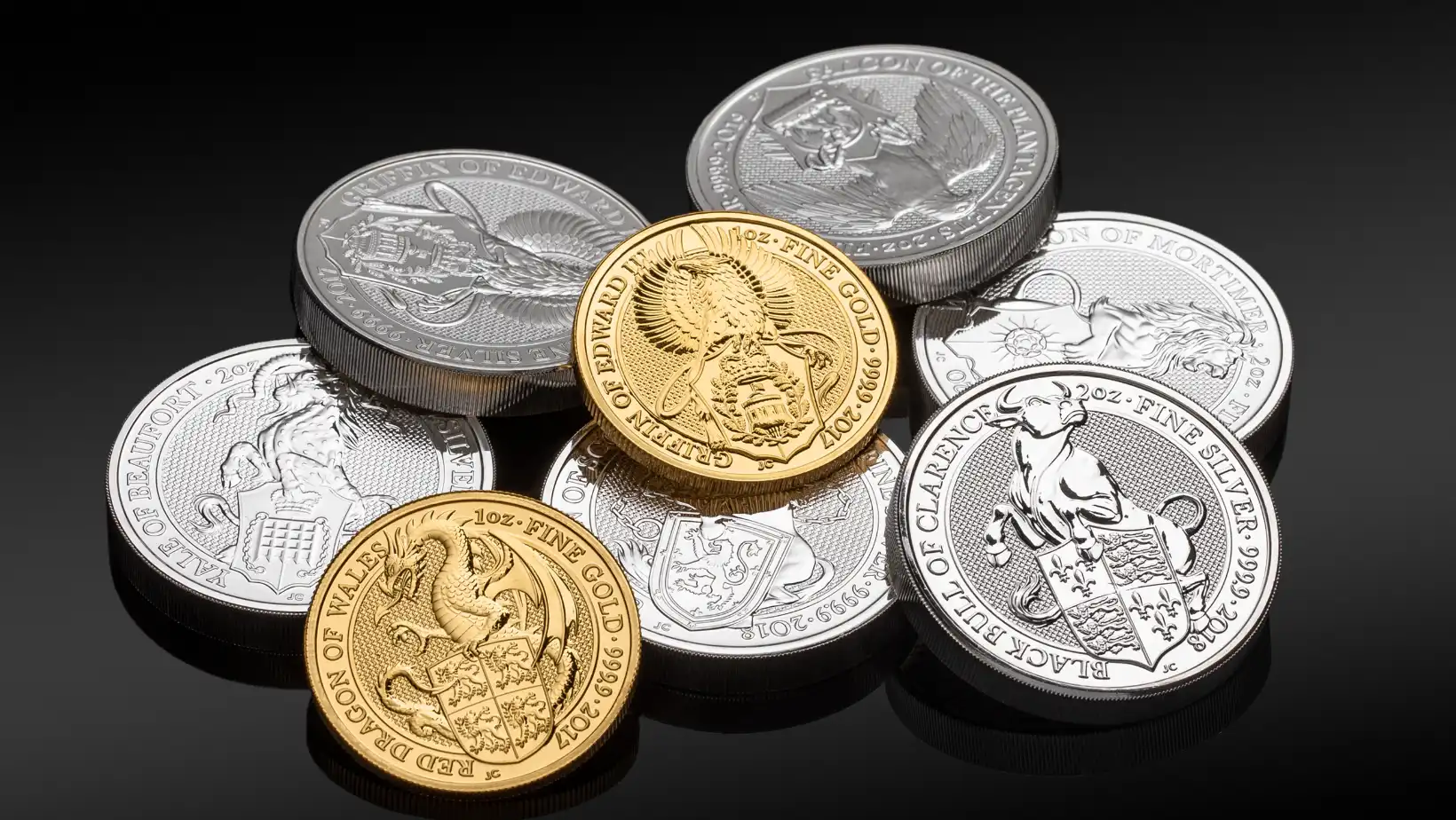
Not sure whether you should be investing in gold or silver?
Gold and silver have protected wealth for thousands of years, but they’re not the same metal, and they’re not the same investment.
One is steady, defensive, and backed by central banks. The other is volatile, industrial, and full of speculative upside. Most people ask, “Should I buy gold or silver?” without realizing the real question being, “What am I trying to accomplish?”
This guide gives you the full picture.
We’ll cover the key differences, which metal fits your goals, how much to own, how to use the gold-to-silver ratio, and the mistakes that cost beginners thousands. Whether you’re here to preserve wealth or chase growth, this guide will help you figure out your course of action!
The Real Difference Between Gold and Silver
Gold and silver look similar on a price chart, but their behavior, demand, and role in your portfolio could not be more different.
Gold trades at thousands per ounce, moving in steady, defensive patterns. Silver trades at a fraction of the price, swinging wildly with economic cycles. One protects; the other speculates.
Gold costs around $4,000 per ounce in 2026. That high price creates a real barrier for most first-time buyers. Silver sits around $50 per ounce, making it far easier to accumulate gradually. Ten ounces of silver costs about the same as one-tenth of an ounce of gold.
Gold moves like a tortoise.
Its price swings are smaller, smoother, and easier to stomach during market stress. You might see 2–3% monthly moves, sometimes less. Silver moves like a hare, capable of 10% swings in a single month or even a few days.
Gold’s demand is almost purely monetary.
Central banks, governments, institutional investors, and safe-haven seekers drive the market. Geopolitical tension, currency debasement, and falling real interest rates push gold higher. Industrial use is negligible.

Silver serves two masters: money and industry.
Electronics, solar panels, EVs, and AI data centers all need silver. That industrial demand creates structural growth but also cyclicality. When the economy slows, silver can underperform even as gold rises.

Gold is your anchor, and it’s the metal you hold when you want stability, crisis protection, and long-term purchasing power preservation. Silver is your tactical play, the metal you hold when you want upside or when the gold-to-silver ratio signals silver is cheap.
Most investors benefit from holding both, as gold protects your base; silver gives you room to grow.
Which Metal Fits Your Needs?
When it comes to investing in gold and silver, there is no single “better” metal, and the right choice depends entirely on what you’re trying to accomplish.
One metal preserves wealth with steady, reliable performance. The other chases growth with higher risk and higher reward. Your goals, timeline, and risk tolerance decide the winner.
Pros of Gold Investing
- Gold is the safe harbor of the precious metals world.
- Its price moves slowly, but it rarely gives back what it gains. Governments and central banks hold gold, not silver, as a reserve asset. That institutional backing creates a floor under the market.
- Gold’s purchasing power has held for centuries.
- One ounce bought a really nice tunic in the Roman Empire. Today, it still buys you a really nice suit. That’s hundreds of years of stability through wars, depressions, and currency collapses.
- Gold is best for conservative investors.
- If your priority is “sleep well at night” wealth protection, gold is your anchor.
Pros of Silver Investing
- Silver is the high-octane cousin of gold.
- It can outperform gold by a wide margin during bull markets. Industrial demand from solar, EVs, and electronics creates structural tailwinds. That dual role as money and commodity fuels its upside.
- Silver’s lower price makes it accessible.
- You can build a meaningful position with a few hundred dollars. That affordability attracts small investors and speculators who want tangible exposure without the gold price tag.
- Silver is best for aggressive investors.
- If you want growth potential and can handle wild price swings, silver deserves a spot in your portfolio.
Most investors use gold as the core, silver as the satellite.
A 70/30 or 60/40 split gives you stability with upside. You can adjust the ratio based on your risk tolerance and the gold-to-silver ratio.
The best approach in precious metals investing, like with most types of investing, is rarely “all in” strategy.
Investing in gold and silver together give you the full spectrum of protection and opportunity.

How Much Gold and Silver Should You Own?
There’s no one-size-fits-all answer.
The right allocation depends on your risk tolerance, investment goals, storage ability, and overall portfolio size. Most financial advisors recommend a range, not a fixed number. That range gives you flexibility to adjust based on market conditions and personal comfort. Five to ten percent is the mainstream recommendation.
That allocation provides meaningful protection without dragging long-term returns. It’s enough to matter during a crisis, but not so much that you miss out on stock market gains. Conservative investors typically lean heavily toward gold, while more aggressive investors may be keen to hold more silver at any given time.
Investor Table
|
Investment type |
% of Portfolio |
Gold-Silver Split |
Translation |
|
Conservative |
5-10% |
80/20 |
This approach prioritizes wealth preservations over speculative gains |
|
Moderate |
10-15% |
70/30 or 60/40 |
Anchored in gold with room to benefit from silver rallies |
|
Aggressive |
~20% |
50/50 or 40/60 |
Maximizes growth potential with higher volatility in exchange for chance of outsized returns |
Your risk tolerance should dictate your split. If silver’s swings make you nervous, you’re probably too aggressive. Adjust until you can hold through the downturns without panic.
Using the Gold-to-Silver Ratio to Your Advantage
The gold-to-silver ratio is one of the most useful tools for investors, as it tells you which metal is relatively cheap and which is expensive.
Most beginners ignore it, but seasoned investors use it to time their buys and rebalance their portfolios. Understanding this ratio can save you thousands and help you buy low, and sell high.
The ratio shows how many ounces of silver buy one ounce of gold. A ratio of 80:1 means you need 80 ounces of silver to purchase one ounce of gold. That number changes daily as gold and silver prices move independently.
In 2026, the ratio sits around 70–88:1.
That’s well above the modern historical average of 40–60:1. When the ratio is high, silver is cheap relative to gold. When it’s low, silver is expensive. Ratios above 80:1 signal silver is undervalued in relativity to gold. This is when aggressive investors start shifting toward silver. You’re buying more ounces of silver for the same amount of money.
Ratios below 40:1 signal silver is considered overvalued in relativity to gold. This is when you might want to trim silver and add gold. You’re locking in gains and moving into the more stable metal.
Check the gold-to-silver ratio and compare it to your target split. If the ratio has moved significantly, it might be time to rebalance.
Sell high, buy low when the ratio reaches extremes. If silver has rallied and the ratio drops below 40, consider selling some silver and buying gold. If silver has crashed and the ratio spikes above 80, do the opposite. Set a rebalancing schedule and stick to it.
Annual reviews work for most investors. Some prefer quarterly check-ins during volatile markets. The key is discipline, not timing the market perfectly.
The ratio won’t make you rich overnight. But used consistently, it helps you buy more metal for your money over time.
How to Start Investing in Gold and Silver
Getting started is simpler than most people think, and you don’t need a finance degree or a six-figure portfolio.
You need a plan, a clear understanding of your options, and the discipline to stick with it. Here’s how to begin building your precious metals position the right way.
- Physical metals give you direct ownership: Coins and bars are tangible assets you can hold in your hand. You own them outright, with no counterparty risk. But you’ll pay premiums over spot price and need secure storage.
- ETFs offer convenience without the hassle: Funds like GLD and SLV track metal prices without requiring storage. You can buy and sell like stocks. But you don’t own the underlying metal, and tax treatment can be less favorable. Also, for years there have been rumors and signs that “paper precious metals” like these don’t actually have enough metal to back the investments people are making.
- Mining stocks add leverage and income potential: Gold and silver miners can outperform the metals themselves in a bull market. Some pay dividends, giving you cash flow. But you’re taking on company-specific risk, not just metal price risk. When investing in mining stocks, you’re not really investing in precious metals, and precious metal prices rarely have a massive impact on the price of a company’s stock.
It all depends on what you’re comfortable with.
Physical metals for long-term holdings, ETFs for tactical trades, and miners for leveraged exposure. Diversifying your investment methods reduces single-point failure risk.
Step-by-step for Beginners:
- Determine your total allocation. Decide what percentage of your portfolio you want in precious metals. Five to ten percent works for most beginners.
- Decide your gold and silver split. Conservative investors might go 80/20 gold to silver. Aggressive investors might go 50/50.
- Choose your investment method. Physical metals work best for long-term wealth preservation. ETFs work for short-term trades. Mining stocks work for income and leverage.
- Start small and scale over time. Buy a few coins or bars to get started. Dollar-cost averaging reduces timing risk. After this, you can grow your stack in an educated way.
- Set a rebalancing schedule. Review annually or when the gold-to-silver ratio hits extremes.
The hardest part is taking the first step! Once you own your first ounce, everything else becomes easier. if you want to invest in your first ounce today, check out Gold Guys Bullion for some of the best deals on investment grade metals.
Mistakes to Avoid
Even smart investors make predictable errors with precious metals.
These mistakes cost thousands and undermine the whole point of owning gold and silver. Knowing what not to do is just as important as knowing what to do. Here are the three biggest traps beginners fall into.
Chasing Performance
Buying after a big rally is the fastest way to lose money.
Investors who bought silver at $50 in 1980 waited over 30 years to break even, and more recently when silver spiked to over $100 an ounce when lots of people bought silver because the news said it was at all time highs. Those who bought gold at $1,900 in 2011 waited nine years. Performance chasing turns hedges into speculation.
Look at the gold-to-silver ratio, and do your own research before buying.
If silver has just doubled and the ratio is below 40, you’re likely buying high. If gold has been flat for years and the ratio is above 80, you’re likely buying low. Use valuation, not momentum.
Build your personal thesis for how you think the metals market will move long term, then ask yourself this question before you buy, “based on my understanding of the market, do I think gold or silver will be worth more in the future than it is today?”
Treating Gold and Silver as Interchangeable
Gold and silver are not the same investment. They move differently, respond to different drivers, and serve different roles in your portfolio. Treating them as interchangeable leads to poor allocation decisions.
Silver can underperform during recessions even when gold rises. That’s because silver’s industrial demand drops while gold’s safe-haven demand increases. If you expect them to move in lockstep, you’ll be disappointed.
Understand each metal’s role and allocate accordingly.
Gold is your anchor. Silver is your tactical play. Respect the difference and your portfolio will reflect that clarity.
In Summary
Gold and silver both have roles in a well-diversified portfolio.
Gold offers stability, crisis protection, and centuries of proven purchasing power. Silver offers affordability, industrial demand tailwinds, and higher growth potential. Most investors benefit from holding both. Your allocation should match your risk tolerance. Conservative investors lean heavy on gold. Aggressive investors give silver more room to run. The gold-to-silver ratio helps you decide when to tilt one way or the other.
Start small, stay disciplined, and avoid the common mistakes.
Don’t overallocate, don’t chase performance, and don’t treat these metals as interchangeable. Build your position over time, rebalance when the ratio signals it, and hold through the volatility.
Ready to take the next step?
Visit goldguysbullion.com to explore our selection of physical gold and silver bullion, and start investing today.
Want to learn more? Check out our related articles or sign up for our educational email course.
The best time to start was yesterday. The second-best time is now.
FAQ
What is the difference between gold and silver investment?
Gold is less volatile and primarily an investment and safe-haven asset. Silver is more volatile and has significant industrial demand in addition to investment demand.
How much of my portfolio should be in gold and silver?
Most financial advisors recommend 5–10% for conservative investors, 10–15% for moderate investors, and up to 20% for aggressive investors.
Is gold or silver a better hedge against inflation?
Gold has historically been a more reliable inflation hedge, preserving purchasing power over centuries. Silver also hedges inflation but with more volatility.
What is a good gold-to-silver ratio?
A ratio between 40:1 and 60:1 is considered balanced. Ratios above 80:1 suggest silver may be undervalued, while ratios below 40:1 suggest silver may be overvalued.
Should I buy physical gold and silver or invest through ETFs?
Physical metals offer tangible ownership and no counterparty risk but require storage and insurance. ETFs are convenient but don’t provide direct ownership. There’s a common saying in the precious metals world, “if you don’t hold it, you don’t own it.”