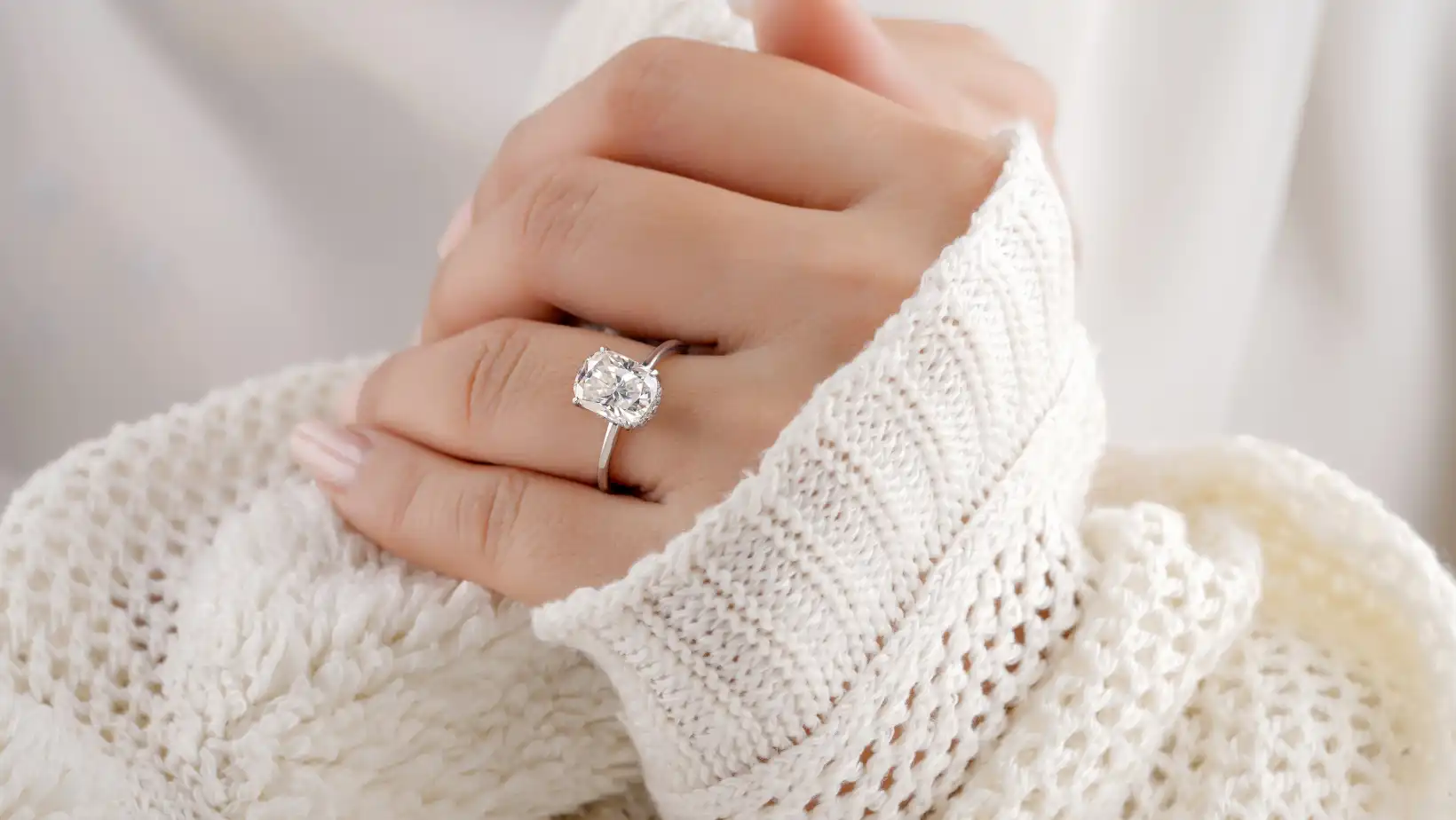
You walk into a luxury retail jewelry store with five thousand dollars in your bank account.
You walk out twenty minutes later holding a shiny ring that is instantly worth three hundred dollars on the secondary market. That sudden collapse in value feels like an absolute robbery to the average consumer expecting long-term appreciation. Most people assume fine jewelry acts as a store of value, but secondary commodity markets quickly prove that assumption wrong.
The massive gap between sentimental value and economic value catches almost every seller completely off guard.
If you have ever wondered what your jewelry is actually worth in cold hard cash, you are not alone. Once you pull back the curtain on retail markups versus secondary commodity markets, the entire system makes complete sense. Read on to learn about the hidden mechanics of retail pricing, why men’s bands beat diamond rings, and how to calculate your gold’s melt value.
The Retail Illusion: Why Resale Value Drops Off a Cliff
Retail jewelry stores operate on massive markup engines ranging from five hundred to two thousand percent over raw commodity costs.
When you pay five thousand dollars for a ring at a mall retail chain, you are not paying for pure gold. You pay for prime commercial storefront rent, expensive television campaigns, celebrity designer licensing fees, and retail sales commissions. You also cover the skilled bench jeweler labor required to set dozens of microscopic accent stones into complex custom mountings.
None of those operational retail expenses add a single penny of intrinsic value once you walk out the door.
You must separate retail price tags from true intrinsic melt value to understand what your items are worth.
Retail value is simply a temporary price paid for a finished piece under the influence of heavy emotional marketing. Intrinsic melt value represents the pure market rate of underlying precious metal calculated against real-time global spot prices. The secondary market completely ignores emotional retail stories and pays strictly for the actual weight and purity of physical metal.
Central banks continuously debase paper currency, making retail consumer goods look progressively more expensive over time.
While fiat currency printed out of thin air loses purchasing power, the actual physical weight of your gold ring stays constant. Retail jewelers use currency debasement to justify higher retail price tags each year, but the underlying raw material never changes.
Once you strip away the paper illusion and marketing hype, only raw commodity weight retains true liquid market value.

The Reality of Retail vs. Melt Value
A client recently walked into one of our shops holding an appraisal receipt for a halo diamond engagement ring. The receipt clearly showed an initial retail purchase price of four thousand five hundred dollars before sales tax.
After testing the gold purity and weighing the metal, our specialist broke the hard economic truth to the client. The delicate mounting contained just two hundred and fifty dollars in raw gold weight alongside small commercial diamonds carrying zero wholesale demand.
The client felt initial shock realizing where their money went during that original retail transaction. Learning how commodity melt values operate gave them clarity and empowered them to make smart decisions with their physical assets.
The Men’s Band vs. Women’s Diamond Ring Paradox
Most people naturally assume that the sparkling diamond engagement ring holds almost all the resale equity in a marriage.
In reality, the plain heavy men’s wedding band almost always beats the complex women’s diamond ring in raw cash payout. This subverts expectations, but basic math behind secondary commodity markets makes the final outcome completely undeniable.
|
Ring Style |
Primary Material |
Average Scrap Weight |
Typical Resale Cash Value |
|
Delicate Women’s Halo Ring |
Micro-pave diamonds & gold |
2 to 4 grams |
$120 – $240 |
|
Solid Men’s Plain Band |
Heavy solid gold alloy |
5 to 12+ grams |
$250 – $720+ |
The secondary market holds a harsh truth regarding the actual cash value of pre-owned diamonds.
Small accent stones and micro-pave diamonds cost giant jewelry manufacturers pennies on the dollar when purchased in massive bulk lots. Secondary buyers assign virtually zero dollar value to these small chips because removing and re-cutting them exceeds their market worth. Furthermore, the massive explosion of lab-grown diamonds has completely wrecked secondary market pricing for synthetic stones down to near zero.
Small diamonds lack intrinsic rarity, meaning only natural certified stones over 0.5 carat carry meaningful secondary demand.
The true cash power of a wedding band comes down to simple heavy gold weight measured on a calibrated scale.
A typical women’s delicate ring mounting contains only two to four light grams of solid gold under all those accent stones. A traditional men’s solid band easily weighs anywhere from five to twelve or more grams of dense fourteen-karat gold. Because gold trades on global spot markets purely by weight, a heavy men’s band consistently yields three to five times more cash.
Ranking Your Selling Routes: From Worst Payout to Best
Navigating the secondary precious metals market requires understanding exactly how different buyers make their money off your items.
|
Selling Option |
Speed & Convenience |
Financial Risk / Fees |
Typical Cash Payout |
|
Garage Sales |
Instant |
Exploitative pricing |
Absolute Bottom Dollar |
|
Pawn Shops |
Instant |
High overhead margins |
30% to 50% Below Melt |
|
Consignment |
Extremely Slow (Months) |
20% to 50% store fees |
Variable (No Guarantee) |
|
Direct to Consumer |
Slow (Risk of Scams) |
High safety risk |
Slightly Above Melt |
|
Jewelry Trade-In |
Instant |
Forced 2x-3x extra spend |
Paper Credit (Or a Really Low Cash Offer) |
|
Gold Guys Direct Buyer |
Instant (In-Person / Mail) |
Zero fees / Transparent |
Maximum Liquid Cash |
1. Garage Sales & Estate Liquidations
Selling precious metals at a yard sale is the absolute worst way to convert jewelry into actual cash.
Opportunistic bargain hunters actively target uninformed sellers who do not own precision scales or understand basic gold hallmarks. You receive pennies on the dollar from buyers who immediately resell your items to a professional buyer for massive profit.
2. Pawn Shops
Pawn brokers operate general storefronts with high building overhead and massive inventory risks across thousands of consumer items.
Because they hold diverse inventory sitting on shelves for months, they buy precious metals at steep discounts to protect cash flow. A traditional pawn shop routinely offers forty to fifty percent below actual melt value to cover operational costs and slow retail turn times.
3. Jewelry Store Consignment
Leaving your ring in a retail display case can occasionally yield a higher payout if an end-buyer falls in love with the specific design.
However, this route requires you to wait many months or even years while your item sits behind glass gathering dust in a showroom. The store will also take a massive commission cut ranging from twenty to fifty percent of the final sale price to cover staff payroll.
4. Selling Direct to Consumer
Listing your wedding ring on local classified sites or social media marketplaces allows you to target an end-user directly.
You might capture slightly above scrap value if a private buyer happens to like the specific aesthetic design and finger size. Unfortunately, this route comes with personal safety hazards, constant lowball offers, fake digital payments, and weeks of wasted time dealing with no-shows.
5. Retail Store Trade-In
Returning to a retail jewelry chain to trade in your old ring offers what looks like the highest theoretical dollar number on paper.
The massive catch is that you rarely receive actual liquid cash you can spend at the grocery store or deposit into your bank account. The store forces you to accept store credit tied to strict conditions requiring you to spend two or three times more out-of-pocket on new items.
6. Precious Metal Specialists & Direct Buyers
Selling directly to specialized precious metal buyers provides the safest and most profitable way to convert physical jewelry into liquid cash.
Specialists test metal purity accurately and weigh your items on certified digital scales right in front of your eyes without sales pressure. Companies like The Gold Guys pay on the spot based directly on live global market rates, eliminating retail middleman fees entirely whether in-store or by mail.

How to Calculate Your Ring’s True Intrinsic Melt Value
Calculating the raw commodity value of your gold jewelry before walking into a store requires basic high school math.
|
Karat Hallmark |
Common Uses |
|
|
10K |
41.7% Pure Gold |
Durable Men’s Bands |
|
14K |
58.3% Pure Gold |
Standard US Jewelry |
|
18K |
75.0% Pure Gold |
High-End Fine Jewelry |
|
24K |
Investment Bullion |
First, inspect the inside of the band using a magnifying glass to locate the small metal purity hallmark stamp.
|
Calculation Step |
Action Required |
Example Calculation |
|
Step 1: Identify Karat |
Read internal band stamp |
14K Gold = 58.3% Purity |
|
Step 2: Weigh Metal |
Weigh on digital scale |
10.0 Grams Total Weight |
|
Step 3: Check Spot Price |
Look up live 24K spot market |
$75.00 per Gram Spot Rate |
|
Step 4: Apply Formula |
Weight x Purity x Spot Rate |
10g x 0.583 x $75 = $437.25 Raw Melt |
A mark reading 10K means the alloy contains 41.7% pure gold, while 14K contains 58.3% pure gold, and 18K represents 75.0% pure gold. Next, place the ring on a digital gram scale to determine its total weight, keeping in mind that some precious metal buyers use pennyweights instead of grams.
Finally, check the live 24K pure gold spot price per troy ounce on a financial chart and plug your numbers into a basic formula.
Multiply the total weight of your ring by its gold purity percentage, then multiply that number by the current live spot price per gram. Recognize that no buyer can pay you one hundred percent of that raw calculated melt value figure. Refineries charge processing fees to melt down alloys, and legitimate businesses must cover basic labor overhead while earning a small profit margin.
When you work with a direct metal specialist like The Gold Guys, you will always retain the vast majority of your ring’s intrinsic melt value.
Converting Physical Items Into Liquid Cash
Stop measuring your personal wealth using the inflated price tags printed on retail jewelry store receipts.
Real financial clarity comes from measuring physical assets in pure metal weight, verifiable purity, and real-time commodity spot rates. When you decide to convert old or unused jewelry into immediate cash, cut out the middleman games and avoid retail store credit traps.
The Gold Guys make selling precious metals completely simple, honest, and totally transparent for every single customer.
|
The Gold Guys Advantage |
What It Means for You |
|
Total Testing Transparency |
We test purity and weigh metal directly in front of your eyes |
|
Quote Meet-or-Beat Guarantee |
Bring any legitimate written offer and we will match or beat it |
|
Zero-Pressure Environment |
Walk away with your items anytime, or take immediate cash |
|
Flexible Selling Routes |
Visit our Minnesota locations or request a nationwide Mail-In Kit |
Our team tests your items directly in front of you and offers a Quote Meet-or-Beat Guarantee on any legitimate written payout offer.
You can visit any of our physical storefront locations across Minnesota for a fast, friendly, and completely free in-person valuation today. If you live outside the local area, simply request a free, zero-obligation Mail-In Kit delivered directly to your doorstep with full shipping insurance included.
Frequently Asked Questions
What percentage of retail value do you get back when selling a wedding ring?
Sellers typically receive between 10% to 30% of the original retail purchase price when selling a wedding ring on the secondary cash market. This drop occurs because retail store prices reflect high markups for store rent, labor, marketing, and sales commissions, none of which add intrinsic value to the physical precious metal.
Why is a men’s plain gold band worth more than a woman’s diamond ring on the resale market?
A men’s plain gold band is worth more because it contains significantly more raw gold by weight (typically 5 to 12+ grams) compared to a delicate women’s ring setting (2 to 4 grams). Secondary buyers pay for physical metal weight at spot market prices, while small accent diamonds and lab-grown stones carry almost zero resale value on wholesale markets.
Are small accent diamonds worth anything when selling scrap jewelry?
No, small accent diamonds (such as micro-pave or stones under 0.50 carats) carry virtually zero resale value when selling scrap jewelry. Secondary market buyers incur higher labor costs to unseat, re-cut, and grade small diamonds than the stones are worth in bulk wholesale markets.
Why did the jeweler say my ring was worth thousands, but buyers offer far less today?
Retail jewelers sell finished consumer fashion products carrying massive markups to cover overhead, sales commissions, and marketing campaigns. Secondary buyers only purchase the raw underlying physical commodity at live market rates. You originally paid for store rent, bench labor, and brand storytelling rather than the actual raw weight of the physical metal.
Is 10K gold real gold, and is it actually worth selling for cash?
Yes, 10K gold is solid gold containing exactly 41.7% pure gold mixed with durable base metals. Because men’s wedding bands use 10K or 14K gold for added durability, their heavy weight routinely yields substantial cash payouts at a direct buyer.
What if I don’t know if my ring is real gold or platinum?
Bring your items to any Gold Guys location or use our free insured Mail-In Kit to have our specialists evaluate them for free. We utilize state-of-the-art testing methods to quickly verify exact metal purity.